Most tattoo styles can be told apart by three things: how heavy the lines are, how color is used, and what is usually drawn. This guide covers 15 common types of tattoos, from Japanese irezumi and American traditional to black and grey, fine line and watercolor, with a comparison table and sources. It also shows which styles are posted most on Tattoo Japan.
Key takeaways
- Tell styles apart by line weight, color (full color, black and grey, or solid black) and typical subjects
- The styles with the longest history include Japanese traditional (irezumi), American traditional and Polynesian-based tribal work
- Black and grey has its roots in the Chicano (Mexican American) culture of East Los Angeles
- On Tattoo Japan, the most-posted styles are black and grey (274), fine line (185) and Japanese traditional (137), as of October 25, 2026
- Browse tattoo designs by style
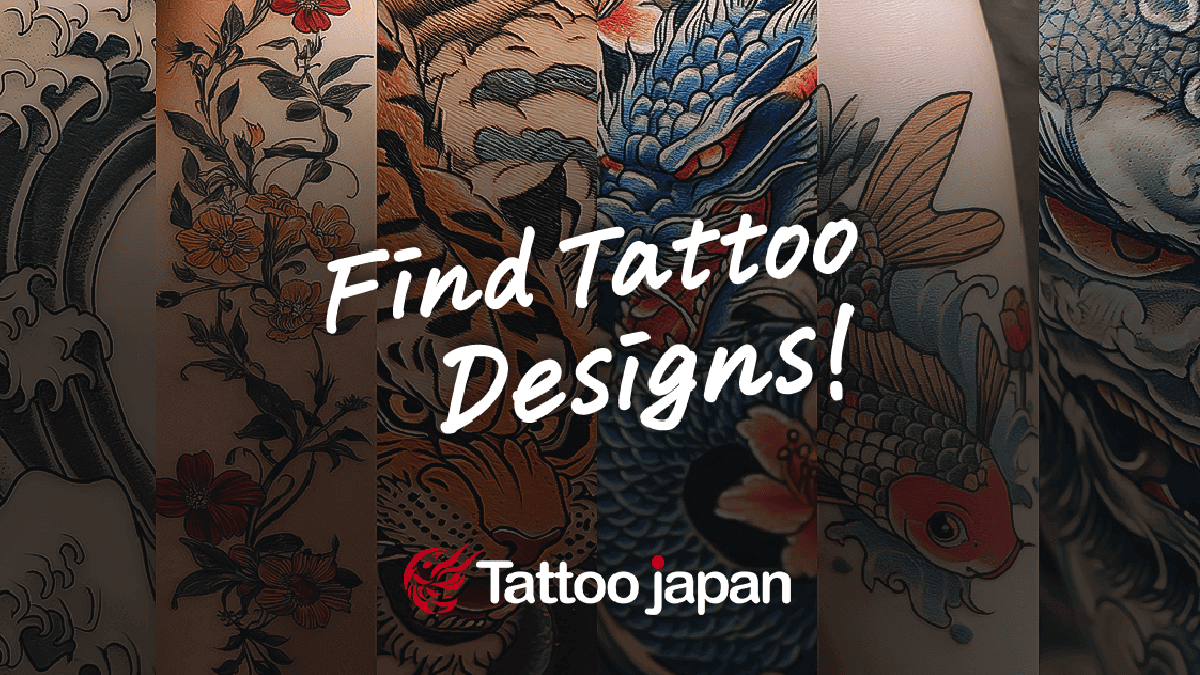
When a style catches your eye, you can compare real work in Tattoo Japan's style galleries, such as Japanese Traditional and Black and Grey.
Tattoo Styles at a Glance
Here are 15 common tattoo styles, compared by look and typical subjects. Plenty of tattoos mix two or more styles.
| Style | Look | Typical subjects |
|---|---|---|
| Japanese (irezumi) | One large, flowing composition | Dragons, koi, peonies, hannya |
| American traditional | Bold black lines, bright color | Swallows, anchors, roses, eagles |
| Tribal | Bold solid-black patterns | Curving patterns that follow the body |
| Neo-traditional | Bold lines, richer shading and color | Women's faces, animals, flowers |
| New school | Cartoon-like exaggeration | Characters, animals |
| Black and grey | Fine lines, soft gray shading | Portraits, religious images |
| Chicano | Black and grey, ornate script | Portraits, roses, masks |
| Realism | Photo-like detail | People, animals |
| Blackwork | Large areas of solid black | Patterns, solid fills |
| Dotwork | Shading built from dots | Mandalas, geometric patterns |
| Geometric | Lines and shapes | Circles, triangles, symmetry |
| Fine line | Thin, delicate lines | Flowers, constellations |
| Minimal | One small, simple piece | Hearts, stars, moons |
| Lettering | Words are the design | Names, dates, quotes |
| Watercolor | Soft, painterly color | Flowers, butterflies, animals |
The subjects column lists common examples, not rules. The sections below explain where each style comes from, with sources. For what the motifs stand for, see our tattoo meanings list.
Traditional Tattoo Styles: Irezumi, American Traditional and Tribal
Japanese Traditional (Irezumi)

Japanese traditional tattooing is often called irezumi in English. In Japanese it is also called wabori ("Japanese carving"), a word coined to tell it apart from Western-style tattoos. (Source: VICE, Nov 2020)
In the first half of the 19th century, ukiyo-e artist Utagawa Kuniyoshi portrayed the outlaw heroes of the Chinese novel Water Margin (Suikoden) with full-body tattoos, and the series was a huge hit. Tattoos grew larger and more elaborate through the century, culminating in the full-body tattoo. (Source: nippon.com, “Irezumi”: The Japanese Tattoo Unveiled (Jan 2017))
Common motifs include dragons, koi, tigers, phoenixes, peonies, cherry blossoms and hannya masks. A typical Western tattoo begins as a small piece without a background, while a full Japanese bodysuit is one unified design that takes dozens of sessions over many months. (Source: VICE, Nov 2020) For the words irezumi, horimono and tebori, see Irezumi vs tattoo.
American Traditional (Old School)
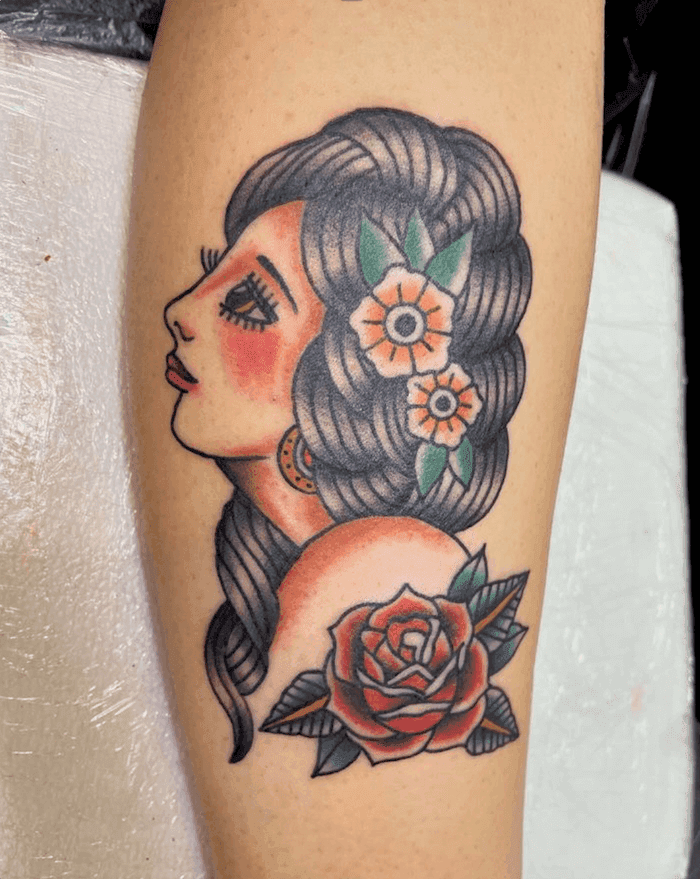
American traditional, also called old school, is known for thick black outlines and bright colors. (Source: NPR, Apr 2018)
One of its most famous artists is Norman Collins, better known as Sailor Jerry, who worked in Honolulu and is often regarded as the father of modern-day tattooing. His rise coincided with World War II, when Hotel Street was notorious as the place for a sailor to get tattooed. In the 1960s he began fusing classic Americana with the nuance of Japanese tattoo art. (Source: HONOLULU Magazine, Dec 2009)
Collins was a Navy sailor himself, and he drew flash: the designs pinned on a shop's wall for customers to choose from. (Source: American Institute for Conservation, May 2012) Swallows, anchors, eagles and roses are classic American traditional motifs. Their meanings are in our tattoo meanings list.
Tribal and Polynesian
Today, "tribal" usually means bold, solid-black patterns inspired by the traditional tattoos of the Pacific islands and other cultures.
The original tattoos carried social meaning. The Samoan pe'a covers a man's lower body in dense tattooing from the waist to the knees, and getting one is often described as a rite of passage for young men. The women's equivalent, the malu, covers the leg from the upper thigh to behind the knee. (Source: Te Papa, Museum of New Zealand, "Sāmoan tatau")
The English word tattoo itself comes from tatau, the Tahitian name for the practice. (Source: Kotobank, Heibonsha World Encyclopedia (Japanese))
Styles That Grew Out of Traditional: Neo-Traditional and New School
Neo-Traditional

Neo-traditional keeps the bold outlines of American traditional but adds finer shading and a wider range of colors. Women's faces, animals and flowers drawn in a decorative way are common.
Because the style packs in more detail, talk with your artist about size and placement before you commit.
New School
New school uses heavy outlines and vivid colors and exaggerates its subjects, and it is sometimes compared to cartoons. Accounts of its start differ: some trace it to the 1970s, others to the late 1980s and 1990s. One scholar noted that California artists were already experimenting with styles in the 1970s, with subjects such as film actors, Disney characters and Star Trek. (Source: Wikipedia, "New school (tattoo)")
On Tattoo Japan, many character pieces are posted as anime tattoo designs.
Black and Grey Styles: Black and Grey, Chicano and Realism
Black and Grey
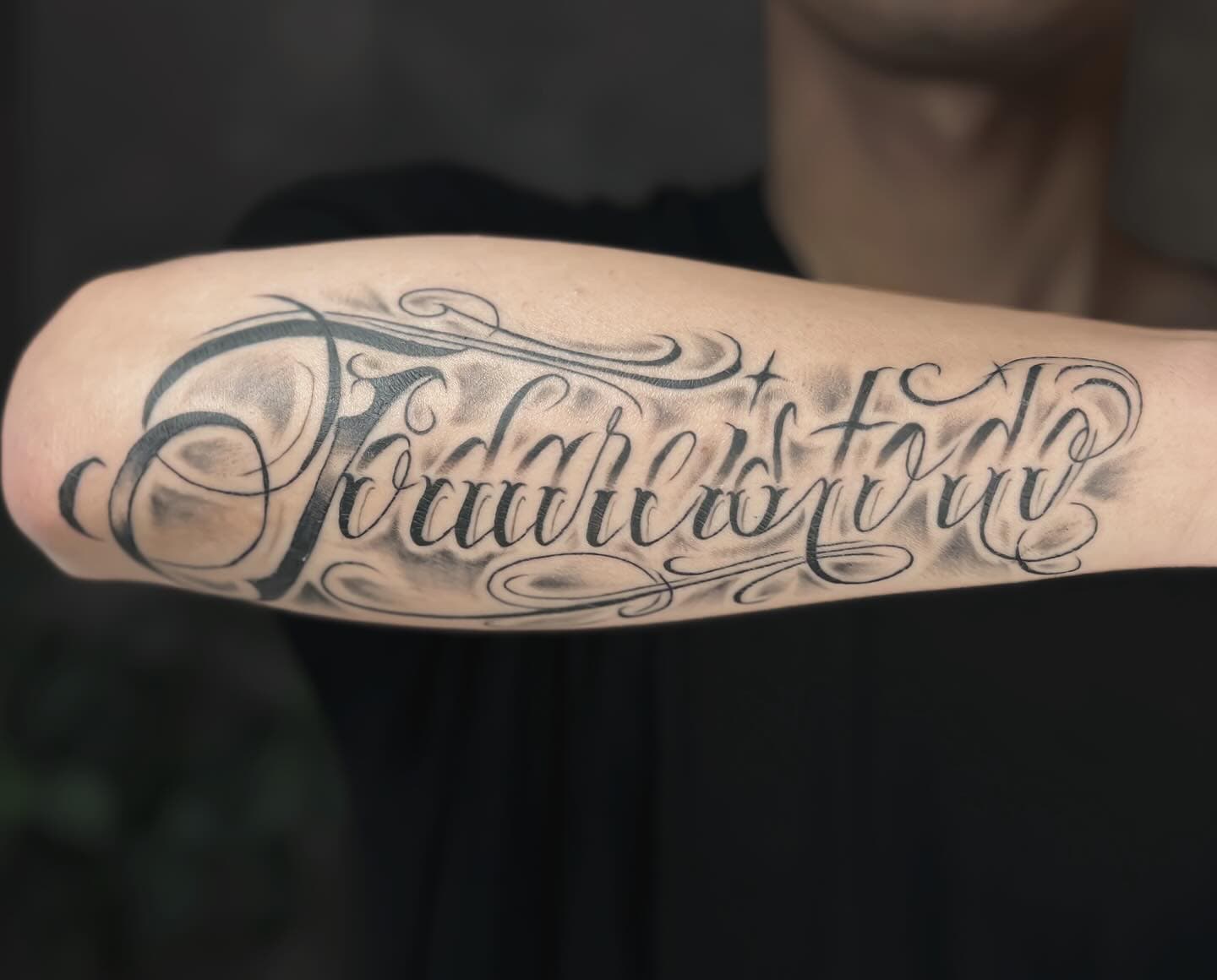
Black and grey uses only black ink and black thinned down to gray. Instead of the thick outlines and bright colors of traditional work, it relies on finer lines and subtle shading, and detailed pieces can look like black-and-white photos. (Source: NPR, Apr 2018)
The style began in prisons. Inmates built homemade machines from parts such as ballpoint pens and guitar strings, with a single needle. With no color ink available, they watered black ink down to get gray. (Source: same)
In the mid-1970s, Good Time Charlie's Tattooland in East Los Angeles switched its machines to a single needle for Mexican American customers who wanted this look. From there it moved out of prison and into tattoo shops around the world. (Source: same)
Chicano
Chicano means Mexican American. Black and grey work rooted in Chicano culture is known as Chicano tattooing.
In prison, Chicano artist Freddy Negrete decorated stationery for other inmates with roses, Catholic and Aztec symbols, and portraits of girls dressed like Mexican revolutionaries with gun belts and sombreros. One of his best-known drawings, comedy and tragedy masks with ornate lettering reading "smile now, cry later", is a design most tattoo shops will recognize by name. (Source: NPR, Apr 2018)
Realism
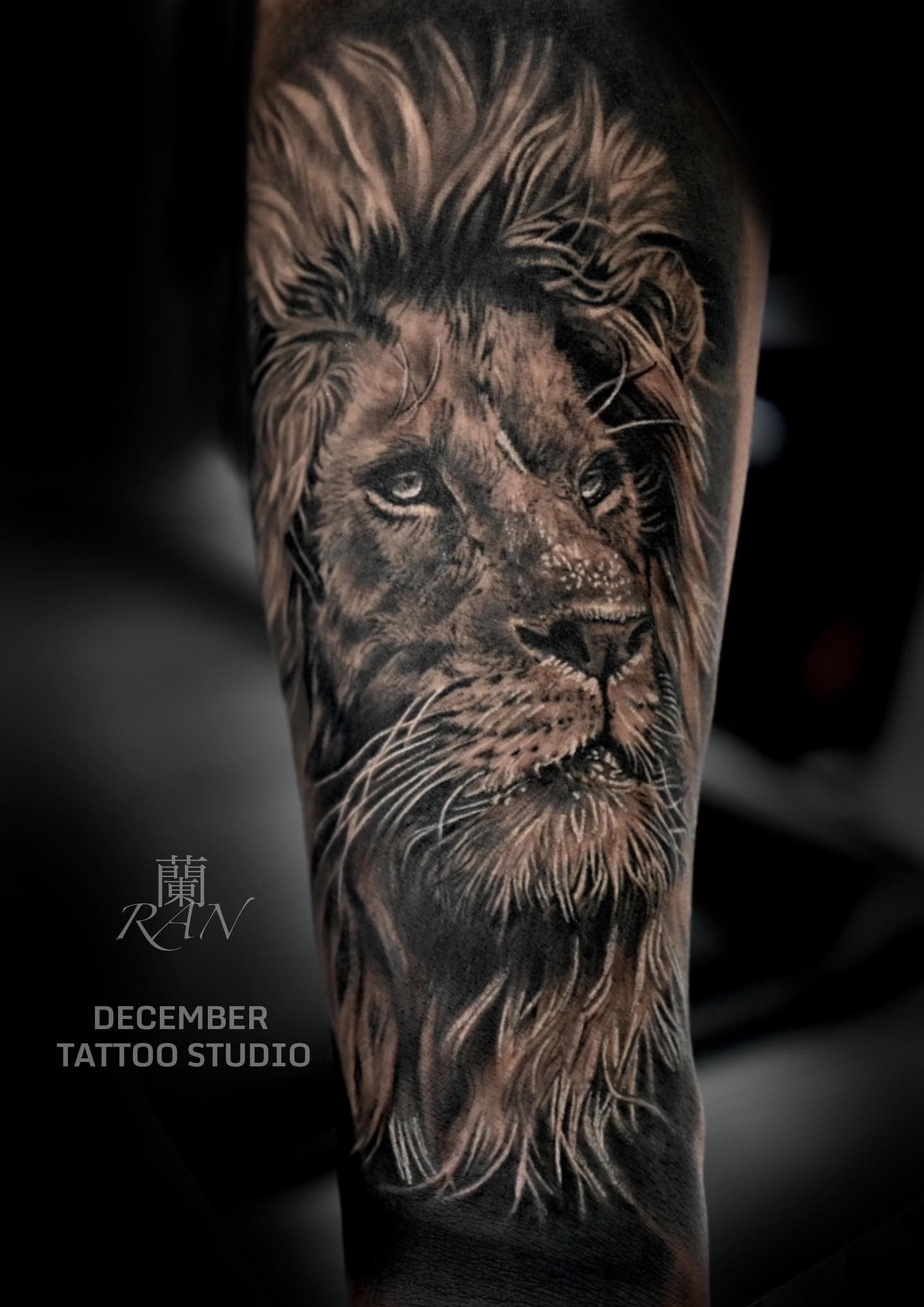
Realism draws people and animals so they look like photographs. When it is done in black and grey, it is often called black and gray realism. (Source: NPR, Apr 2018) Color realism is also common.
If you want a portrait of a family member or a pet, bring the photo you want to use and choose an artist whose portfolio is full of realism.
Blackwork, Dotwork and Geometric Tattoos
These three styles use little or no color. They build the design from black lines, dots and solid areas.
Blackwork and Blackout
Blackwork uses only black ink for patterns, shapes and solid areas. When a large area is filled in completely, it is called blackout.
Tribal patterns are often treated as a kind of blackwork too. Tattoo Japan groups the two together as "Tribal / Blackwork".
Dotwork
Dotwork builds shading from countless dots: packed dots read darker, sparse dots read lighter. It is often combined with mandalas and geometric patterns.
Geometric
Geometric tattoos combine circles, triangles, straight lines and other shapes, often in symmetrical layouts. Some place animals or flowers inside the shapes.
Fine Line, Lettering and Watercolor Tattoos
Fine Line and Minimal Tattoos
Fine line tattoos use thinner needles to create small, delicate designs with more detail. Los Angeles artist Dr. Woo describes his style as "super delicate with a lot of small details in a smaller space", and names his mentor Mark Mahoney as one of the founders of the single-needle style. (Source: Refinery29, Aug 2018)
Small single designs on the wrist or behind the ear are called "one-point" tattoos in Japan. Mieko Yamada, a sociologist who studies Japanese body art, told CNN that students and office workers in Japan tend to prefer contemporary Western styles at a smaller scale. (Source: CNN, Jan 2019) On Tattoo Japan, 321 designs carry the "One Point" tag (as of October 25, 2026).
With very thin lines or tiny lettering, agree on the size and line weight with your artist.
Lettering
Lettering makes words the main design. Script, block letters and kanji each give a very different feel, and Chicano work often pairs ornate lettering with images, as in "smile now, cry later".
Double-check spelling, and ask to see the stencil before you start. If you want kanji, have a native speaker check it. For short English phrases with meaning, see our tattoo meanings list.
Watercolor
Watercolor tattoos look like paint that has bled and blended on paper. Some skip strong outlines and let the color shape the design.
Flowers, butterflies and animals are popular subjects. Talk with your artist about how far the color should spread and whether to add outlines.
Most-Posted Tattoo Styles on Tattoo Japan
As of October 25, 2026, 977 tattoo designs had been posted on Tattoo Japan. A design can have more than one style, so the counts add up to more than 977.
| Style | Designs |
|---|---|
| Black and grey | 274 |
| Fine line | 185 |
| Japanese traditional | 137 |
| Lettering | 116 |
| American traditional | 55 |
| Tribal | 37 |
| Watercolor | 27 |
| Neo-traditional | 16 |
"Fine line" is our "Fine Line / Linework" style and "Tribal" is "Tribal / Blackwork". Among tags, which are separate from styles, "One Point" has 321 designs, "Realistic" 199 and "Chicano" 31.
Black and grey, fine line and Japanese traditional work lead. These are counts of designs posted on Tattoo Japan, not a survey of trends across Japan.
Tebori vs Machine: Two Ways to Tattoo
Style and technique are different things. Besides machine work, some artists in Japan tattoo by hand, a method called tebori.
Tebori artists push ink into the skin with needle-tipped rods. A machine has a depth setting, while a tebori master relies on feel alone. (Source: CNN, Jan 2019) The tebori artist CNN interviewed still uses a machine for outlines, so a Japanese traditional piece is not always hand-poked. (Source: same) If you want tebori, ask the artist directly.
How to Choose a Tattoo Style
Start by saving tattoos you like and checking which style they belong to. The same subject looks completely different as Japanese traditional, American traditional or fine line.
Artists specialize. Contact an artist or studio whose posted work matches what you want, and your idea will be easier to explain.
Prices depend on size and time. See tattoo prices in Japan for typical costs and our tattoo pain chart for placement.
FAQ
What are the main types of tattoos?
The best-known styles are Japanese traditional (irezumi), American traditional, tribal, neo-traditional, new school, black and grey, Chicano, realism, blackwork, dotwork, geometric, fine line, minimal, lettering and watercolor. Many tattoos mix more than one.
What is the difference between traditional, neo-traditional and new school?
All three use heavy outlines. American traditional keeps to bold lines and bright color, neo-traditional adds finer shading and a wider palette, and new school exaggerates its subjects in a cartoon-like way with vivid color.
What is the most popular tattoo style?
On Tattoo Japan, black and grey (274 designs), fine line (185) and Japanese traditional (137) are the most-posted styles as of October 25, 2026. Small one-point tattoos are also common, with 321 tagged designs.
Are there temporary tattoo styles?
Yes. Henna and jagua stain the skin with plant-based dyes, and decal tattoos are stuck on.
- Henna
- A plant-based dye that usually gives a brown, orange-brown or reddish-brown tint. In the US, the FDA approves henna only as a hair dye.
- Jagua
- A blue-black dye made from the fruit of Genipa americana.
- Decal tattoos
- According to the FDA, they may last for a day or up to a week or more.
(Sources: FDA, Temporary Tattoos, Henna/Mehndi, and "Black Henna": Fact Sheet; Contact Dermatitis, 2017)
Avoid "black henna". The ingredient that makes it black is often a hair dye containing p-phenylenediamine (PPD), which can cause dangerous skin reactions in some people. Allergic reactions to genipin, a substance in jagua dye, have also been reported. (Source: same)
Can you mix tattoo styles?
There is no rule against it. The main risk is visual: styles with very different line weights and color can look disjointed side by side. If you plan to add more tattoos later, plan the overall layout with your artist.
The Bottom Line
Tattoo styles differ mainly in line weight, color and subject. If you are unsure, collect tattoos you like and see which style they share.
Once you know your style, the quickest next step is finding an artist who specializes in it.
This article is based on publicly available information as of October 2026 and Tattoo Japan's design data as of October 25, 2026.