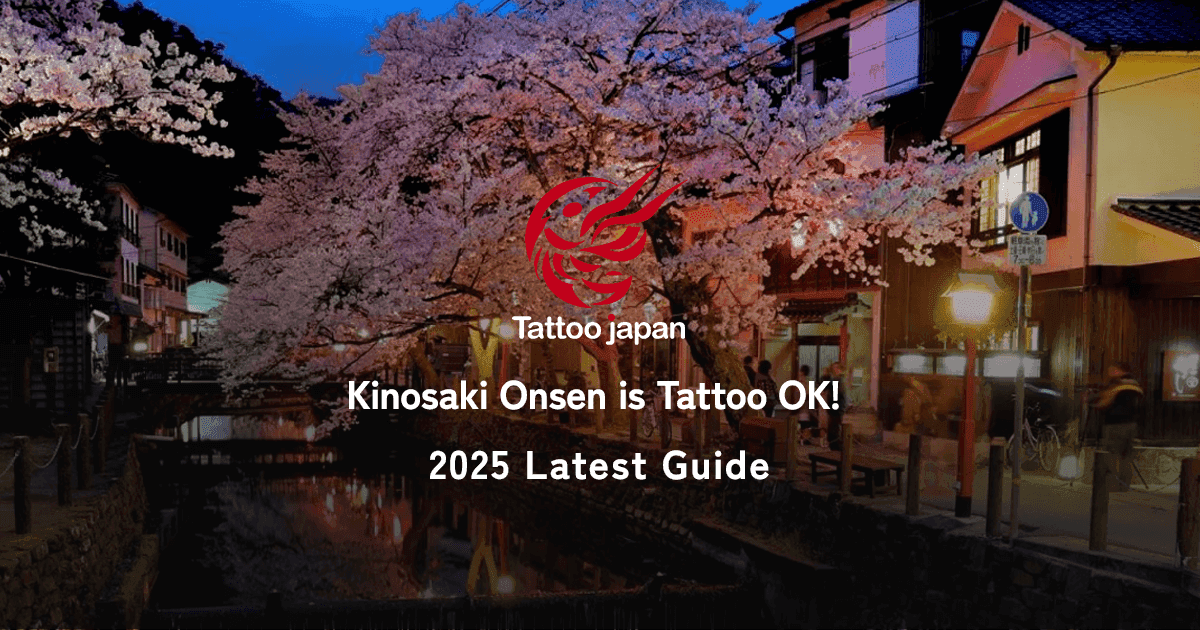
Yes, you can bathe at Kinosaki Onsen with tattoos. Every public bathhouse (sotoyu) in this hot spring town in Hyogo accepts tattoos of any size, and you don't need to cover them. This guide explains how the six bathhouses in operation work, what they cost, how the Yumepa day pass works and which etiquette to follow, checked against official sources on October 23, 2026.
Key takeaways
- All of Kinosaki Onsen's public bathhouses accept tattoos of any size, with no need to cover them
- Six of the seven bathhouses are in operation. Satono-yu has been closed since April 2024
- Kono-yu has been closed for renovation work and is scheduled to reopen on October 28, 2026. Dates can change, so check before you go
- One entry costs 800 yen. The Yumepa day pass costs 1,500 yen and pays off from your second bath
- The tattoo policy covers the public bathhouses. Baths inside ryokan and hotels set their own rules
All six operating bathhouses are listed on Tattoo Japan under tattoo-friendly onsen & saunas in Toyooka City, the city Kinosaki Onsen belongs to.
Can You Go to Kinosaki Onsen With Tattoos?
Yes. Visit Kinosaki, Toyooka City's official tourism website, states that all of Kinosaki Onsen's public hot springs allow tattoos of all sizes, with no need to cover them up. It also calls this "a rarity in Japan." (Source: Visit Kinosaki, "Tattoo Friendly Onsen of Kinosaki"; "The Mystic Onsen")
The Kinosaki Onsen Tourism Association posted the same message in Japanese on its official X account: all of the sotoyu are "tattoo-friendly" (全ての外湯、『タトゥーフレンドリー』です。). (Source: Kinosaki Onsen Tourism Association on X, December 13, 2024)
Why Are Tattoos Allowed?
Neither the tourism association nor the city has published an official reason for the policy.
What Toyooka City does publish is Kinosaki's overall concept, まち全体が一つの宿 (roughly, "the whole town is one inn"), with the station as the entrance, the streets as corridors, the inns as guest rooms, the public baths as the large bath and the shops as the gift shop. It appears in the city's plan for rebuilding Satono-yu, which says nothing about tattoos. (Source: Toyooka City, Satono-yu redevelopment plan summary, PDF in Japanese)
Ryokan Baths Have Their Own Rules
The tattoo policy applies to the public bathhouses. Visit Kinosaki notes that baths inside accommodations may have different rules, so ask your ryokan or hotel before you book. (Source: Visit Kinosaki)
Some inns state their policy publicly. For example, Tenbouen, a ryokan in Kinosaki Onsen, states on its website that guests with tattoos may use its baths. (Source: Tenbouen official website, "Onsen", in Japanese)
How the Public Baths (Sotoyu) Work
In Kinosaki, the baths inside your inn are called uchiyu, and the public bathhouses around town are called sotoyu. (Source: Kinosaki Onsen Tourism Association, "Sotoyu", in Japanese)
- The bathhouses are separated by gender, and you bathe naked
- They sit along the Otani River and near Kinosaki Onsen Station, and you can walk between all of them
- A walking map with a stamp page is sold at the Ryokan Information Center in front of Kinosaki Onsen Station. Each bathhouse has its own stamp
- Strolling between baths in a yukata (light cotton kimono) and geta sandals is a long-standing Kinosaki tradition
(Sources: Visit Kinosaki, "The Mystic Onsen"; Kinosaki-cho Yushima Zaisanku, "Sotoyu", in Japanese)
The tourism association lists the same water for every bathhouse: a sodium-calcium chloride hot spring at 42°C. (Source: Kinosaki Onsen Tourism Association)
Opening Hours, Closing Days and Prices
| Bathhouse | Hours | Closed |
|---|---|---|
| Kono-yu | 7:00–23:00 (reopens Oct 28) | Tuesday |
| Mandara-yu | 15:00–23:00 | Wednesday |
| Goshono-yu | 7:00–23:00 | Thursday |
| Ichino-yu | 7:00–23:00 | Wednesday |
| Yanagi-yu | 15:00–23:00 | Thursday |
| Jizo-yu | 7:00–23:00 | Monday |
| Satono-yu | Closed long-term | – |
Kono-yu's scheduled reopening date can change, so check before you go. The bathhouses are run by Toyooka City's Kinosaki Onsen Division and the Kinosaki-cho Yushima Zaisanku, the local body that owns the hot spring sources. Last entry is 22:30, 30 minutes before closing. Every bathhouse charges 800 yen for adults and 400 yen for children (age 3 through elementary school). (Sources: Kinosaki-cho Yushima Zaisanku, "Sotoyu"; Kinosaki Onsen Tourism Association; Toyooka City, in Japanese)
Closing days sometimes shift for holidays and local events. In October 2026, for example, Ichino-yu and Goshono-yu swapped their closing days for the autumn festival. The bathhouse operator posts a monthly closure calendar (PDF, in Japanese) on its website, so check it before you go. (Source: Kinosaki-cho Yushima Zaisanku)
The Six Open Bathhouses (and Satono-yu)
Kono-yu (鴻の湯)
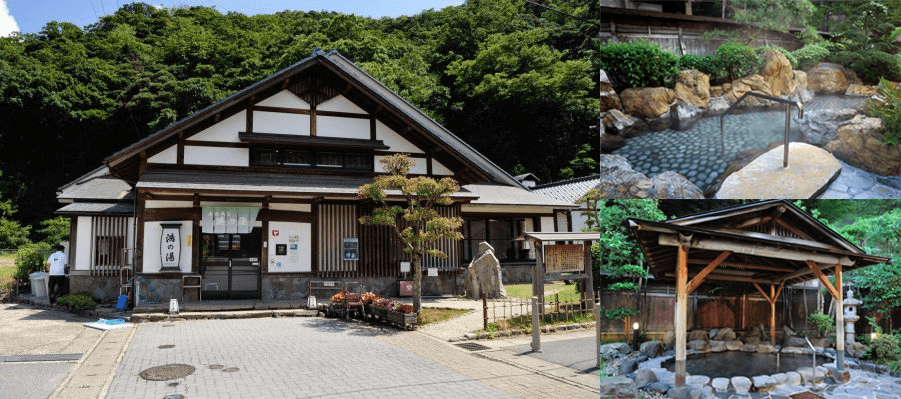
Kono-yu stands at the far end of the town. Legend says the spring was found about 1,400 years ago when a stork was seen healing an injured leg in its water. It has a garden open-air bath. (Source: Kinosaki-cho Yushima Zaisanku, "Kono-yu", in Japanese)
Kono-yu has been closed for a long-term renovation and is scheduled to reopen on October 28, 2026. Reopening dates can change, so check the operator's website before you go. (Source: Kinosaki-cho Yushima Zaisanku)
- Hours
- 7:00–23:00 (last entry 22:30)
- Closed
- Tuesdays
- Address
- 610 Yushima, Kinosaki-cho, Toyooka, Hyogo
Mandara-yu (まんだら湯)
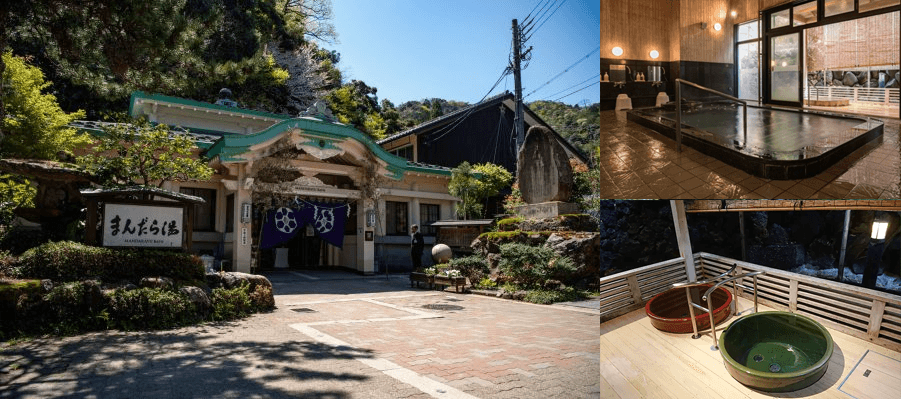
Mandara-yu sits at the foot of the hills, a little back from the main street. According to legend, its water sprang up after Dochi Shonin, the monk who founded Onsenji Temple, prayed for 1,000 days. This is said to be the beginning of Kinosaki Onsen. The outdoor baths are ceramic barrel tubs. (Sources: Kinosaki-cho Yushima Zaisanku, "Mandara-yu"; Kinosaki Onsen Tourism Association, in Japanese)
It opens at 15:00, so plan it for the afternoon or evening.
- Hours
- 15:00–23:00 (last entry 22:30)
- Closed
- Wednesdays
- Address
- 565 Yushima, Kinosaki-cho, Toyooka, Hyogo
Goshono-yu (御所の湯)
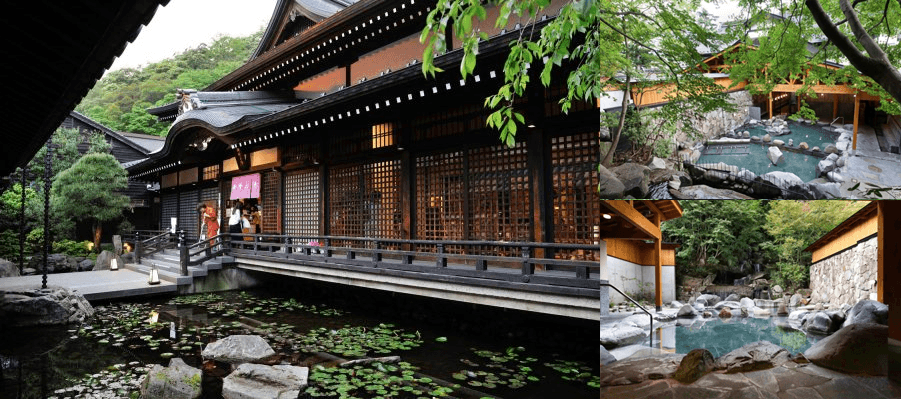
Goshono-yu takes its name from Ankamon-in, an elder sister of Emperor Go-Horikawa, whose visit to bathe here is recorded in the medieval chronicle Masukagami. It has the only fully open-air garden bath among the bathhouses, with views of the green hillside and a waterfall. (Sources: Kinosaki-cho Yushima Zaisanku, "Goshono-yu"; Toyooka City, "Goshono-yu", in Japanese)
The men's and women's baths switch sides every day.
- Hours
- 7:00–23:00 (last entry 22:30)
- Closed
- Thursdays
- Address
- 448-1 Yushima, Kinosaki-cho, Toyooka, Hyogo
Ichino-yu (一の湯)
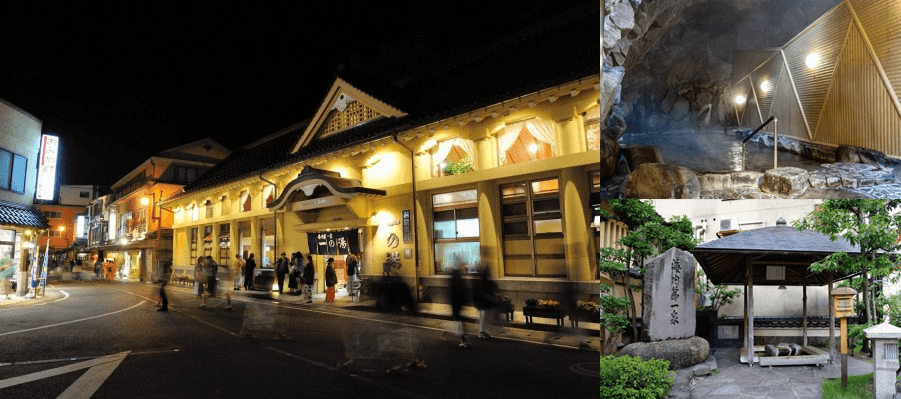
Ichino-yu is named after the Edo-period physician Kagawa Shutoku, who praised Kinosaki's water as the best in the land. The building is modeled on a Momoyama-style kabuki theater, and the highlight is a semi-outdoor cave bath. (Sources: Kinosaki-cho Yushima Zaisanku, "Ichino-yu"; Toyooka City, "Ichino-yu", in Japanese)
Its private family bath is out of service as of October 2026. (Source: Kinosaki-cho Yushima Zaisanku, in Japanese)
- Hours
- 7:00–23:00 (last entry 22:30)
- Closed
- Wednesdays
- Address
- 415-1 Yushima, Kinosaki-cho, Toyooka, Hyogo
Yanagi-yu (柳湯)
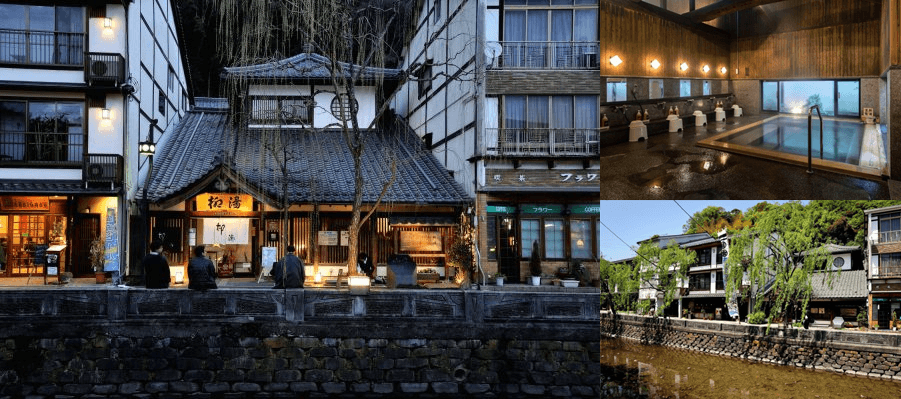
Yanagi-yu is said to have sprung from beneath a willow brought from West Lake in China. It is the smallest bathhouse, with a deep tub and hotter water than the others, and a footbath beside the entrance. (Sources: Kinosaki-cho Yushima Zaisanku, "Yanagi-yu"; Kinosaki Onsen Tourism Association, in Japanese)
- Hours
- 15:00–23:00 (last entry 22:30)
- Closed
- Thursdays
- Address
- 647 Yushima, Kinosaki-cho, Toyooka, Hyogo
Jizo-yu (地蔵湯)
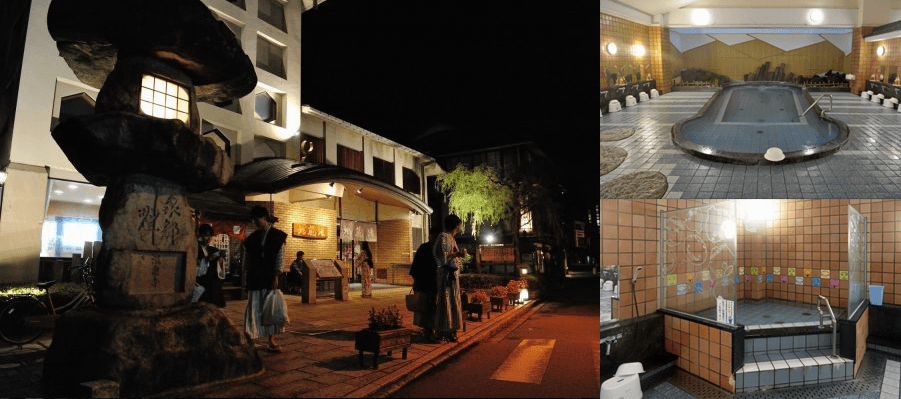
To reach Jizo-yu from Kinosaki Onsen Station, walk along Ekidori Street and cross the Otani River. Legend says a statue of Jizo (a Buddhist bodhisattva) was found at the spring source. Inside is a lukewarm "oyako-buro" bath for parents and children. (Source: Kinosaki-cho Yushima Zaisanku, "Jizo-yu", in Japanese)
Its private family bath is out of service as of October 2026. (Source: Kinosaki-cho Yushima Zaisanku, in Japanese)
- Hours
- 7:00–23:00 (last entry 22:30)
- Closed
- Mondays
- Address
- 796 Yushima, Kinosaki-cho, Toyooka, Hyogo
Satono-yu (さとの湯): Closed Until Its Rebuild
Satono-yu, right next to Kinosaki Onsen Station, had a rooftop open-air bath with a view. It has been closed since April 1, 2024, mainly because the building had aged. (Source: Toyooka City, Satono-yu closure notice, in Japanese)
Toyooka City adopted a plan in May 2025 to rebuild it as one of the seven bathhouses, with a reopening scheduled for fiscal 2028 (April 2028 to March 2029). The city notes the schedule may change. (Source: Toyooka City, Satono-yu redevelopment plan summary, PDF in Japanese)
Yumepa: Kinosaki's Onsen Day Pass
If you plan to visit two or more bathhouses, get the Yumepa day pass. It lets you enter every bathhouse open that day as many times as you like.
| Ticket | Adult | Child |
|---|---|---|
| Yumepa day pass | 1,500 yen | 750 yen |
| Single entry | 800 yen | 400 yen |
(Sources: Kinosaki-cho Yushima Zaisanku, "Bath fees"; Kinosaki Onsen Tourism Association, in Japanese)
Two single entries cost 1,600 yen, so the pass is cheaper from the second bath.
How to Get a Yumepa
- Staying overnight: most accommodations in Kinosaki Onsen give you a Yumepa pass at check-in. Ask your inn whether it offers this
- Day trip: buy the pass at the counter of any bathhouse
(Sources: Visit Kinosaki, "The Mystic Onsen"; Kinosaki Onsen Tourism Association)
Onsen Etiquette in Kinosaki
You don't need to cover your tattoos in the public bathhouses, and the bathhouse rules say nothing about tattoos. Just follow the same etiquette as everyone else. These are the operator's rules:
- Rinse with hot water, then wash your body before getting into the bath
- Keep your small towel out of the bathwater, and don't wash your body or clothes in the tub
- Don't shout, swim or jump into the bath
- Don't use phones or any device with a camera in the changing room or bathing area
- Dry off with your towel before returning to the changing room, so the floor stays dry
- Avoid bathing after drinking alcohol, and drink water before and after bathing
- Don't leave showers and taps running
(Source: Kinosaki-cho Yushima Zaisanku, "Bathing manners", in Japanese)
Tips for Onsen Hopping
- Closing days differ by bathhouse, so all six are open Friday through Sunday, unless there is a temporary closure
- For a morning soak, go to Kono-yu, Goshono-yu, Ichino-yu or Jizo-yu, which open at 7:00. Mandara-yu and Yanagi-yu open at 15:00
- Kinosaki Onsen is about 2.5 hours by train from Kyoto and Osaka
(Sources: Kinosaki-cho Yushima Zaisanku; Visit Kinosaki)
FAQ
Is Kinosaki Onsen tattoo-friendly?
Yes. All of its public bathhouses accept tattoos of any size, and you don't need to cover them. Kinosaki is one of the few onsen towns in Japan where this applies to every public bath.
Do I need tattoo cover stickers in Kinosaki?
Not in the public bathhouses. For the bath at your ryokan or hotel, ask the inn, because each sets its own rules.
How many public baths are open in Kinosaki Onsen?
Six. Satono-yu, the seventh, has been closed since April 2024. The city plans to rebuild it and reopen it in fiscal 2028. Kono-yu is scheduled to reopen on October 28, 2026 after renovation work; check before you go, as dates can change.
How much is the Kinosaki Onsen day pass?
The Yumepa day pass costs 1,500 yen for adults and 750 yen for children. Day-trippers can buy it at any bathhouse, and most overnight guests receive one from their accommodation.
What are the opening hours of the Kinosaki public baths?
Kono-yu, Goshono-yu, Ichino-yu and Jizo-yu are open 7:00–23:00. Mandara-yu and Yanagi-yu are open 15:00–23:00. Last entry is 22:30.
The Bottom Line
Kinosaki Onsen is one of the easiest places in Japan to enjoy an onsen with tattoos: six public bathhouses, no cover-ups and a day pass that makes hopping between them cheap. Check the closure calendar before you go, and ask your inn about its own baths.
Tattoo Japan lists 18 onsen and saunas in Hyogo, 16 of them tattoo-friendly (as of October 23, 2026).
This article is based on official information as of October 23, 2026. Hours, prices and closures can change, so check before you go.