




What a Chicano Tattoo Is
Chicano tattoos draw on the culture of Mexican Americans and are done in black and grey: fine lines and smooth shading in black ink and its diluted grey, with no color.
The technique came out of American prisons. Inmates built machines from ballpoint pens, guitar strings, needles and parts of old boom boxes. Those machines had a single needle, and with no color ink available, the black was watered down to make grey. (Source: NPR, April 15, 2018)
In the mid-1970s, Good Time Charlie's Tattooland opened in East Los Angeles. Its mostly Mexican American clients wanted that prison style, so the owners converted their machines to a single needle. (Source: same as above) From there the style moved from the prisons to the barrios and on to tattoo shops around the world. (Source: same as above)
Chicano Tattoo Designs and Their Meanings
In an NPR interview, Chicano artist Freddy Negrete recalled what the men he tattooed in prison wanted: Catholic imagery, Aztec and Mayan symbols, and Mexican revolutionaries. (Source: NPR, April 12, 2018)
In his memoir he describes his own tattoos as a mix of Aztec, Mexican revolutionary and cholo imagery: "our campfire stories, our myths, the marks of our culture." (Source: NPR, April 15, 2018) Here are the main designs and where they come from.
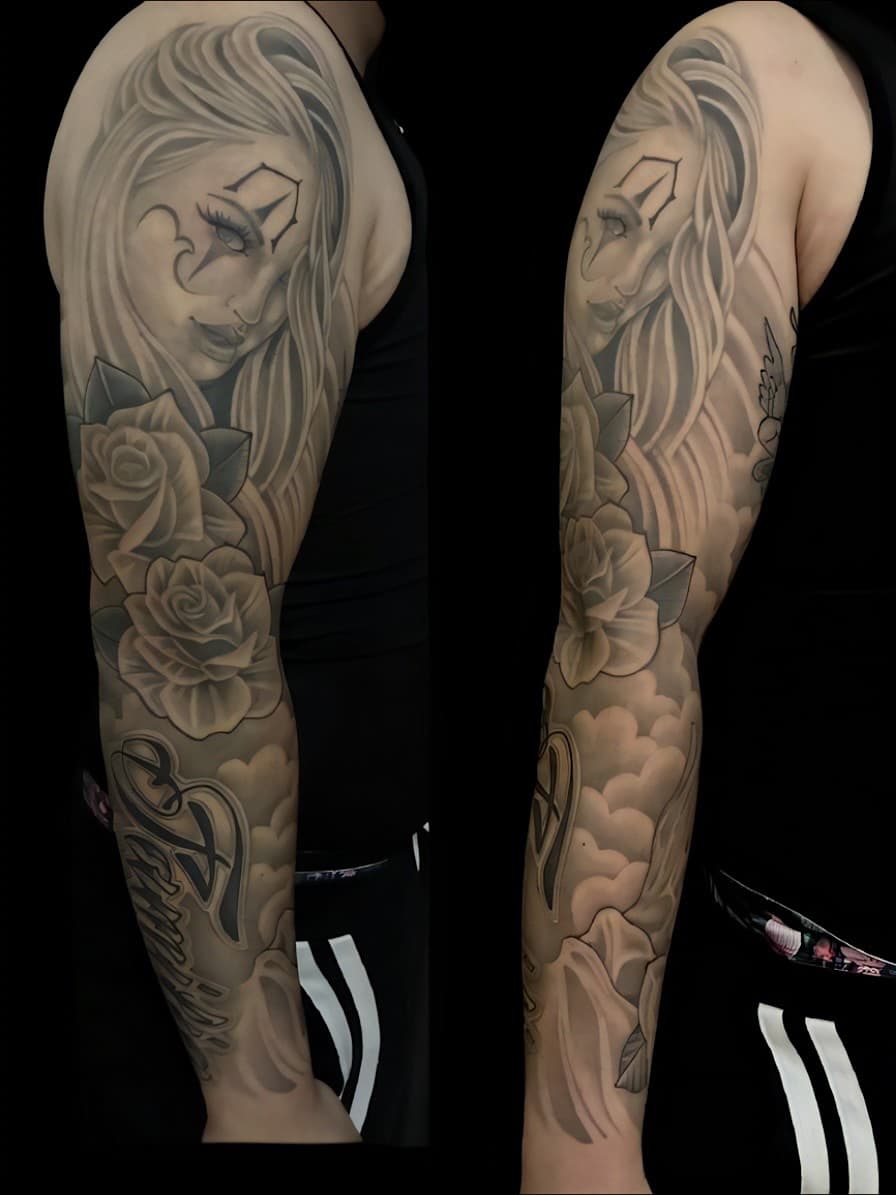
Portraits of women

Negrete turned the Mexican revolutionary into a beautiful girl with a gun belt and a sombrero. He also explained the portraits of loved ones: "we like remembering people that we love that passed away." (Source: NPR, April 12, 2018)
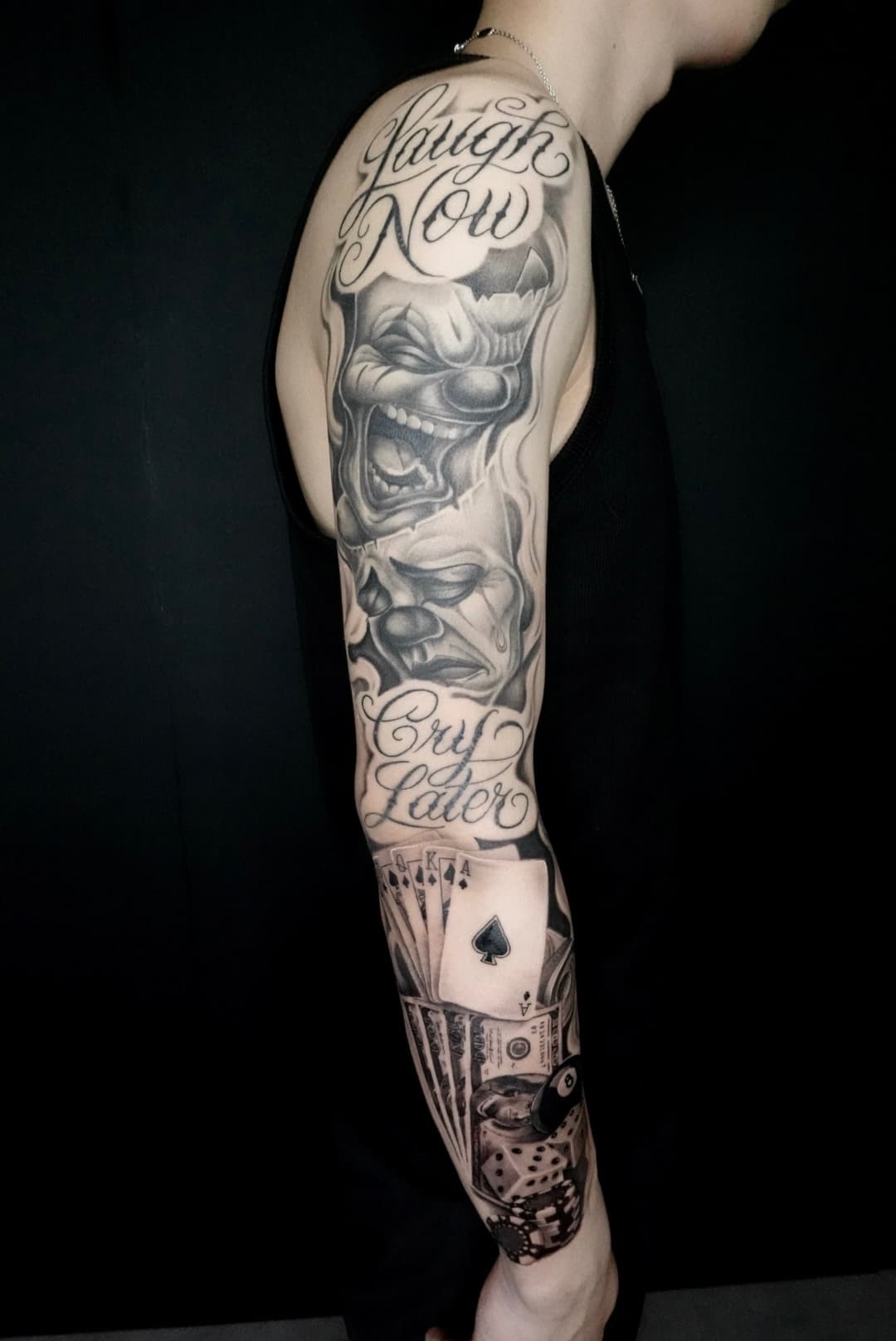
Smile now, cry later
The comedy and tragedy masks with ornate lettering reading "smile now, cry later" come from one of Negrete's best-known drawings, made while he was in the California Youth Authority. Ask for a "smile now, cry later" at most tattoo shops, he says, and the artist will know exactly what you mean. (Source: NPR, April 15, 2018)
See the masks under two-face tattoo designs.
Lettering
Negrete says they started putting Old English lettering on the stomach "because we wanted to say something about who we were and where we were from." (Source: NPR, April 12, 2018)
For choosing words and scripts, see lettering tattoo designs.
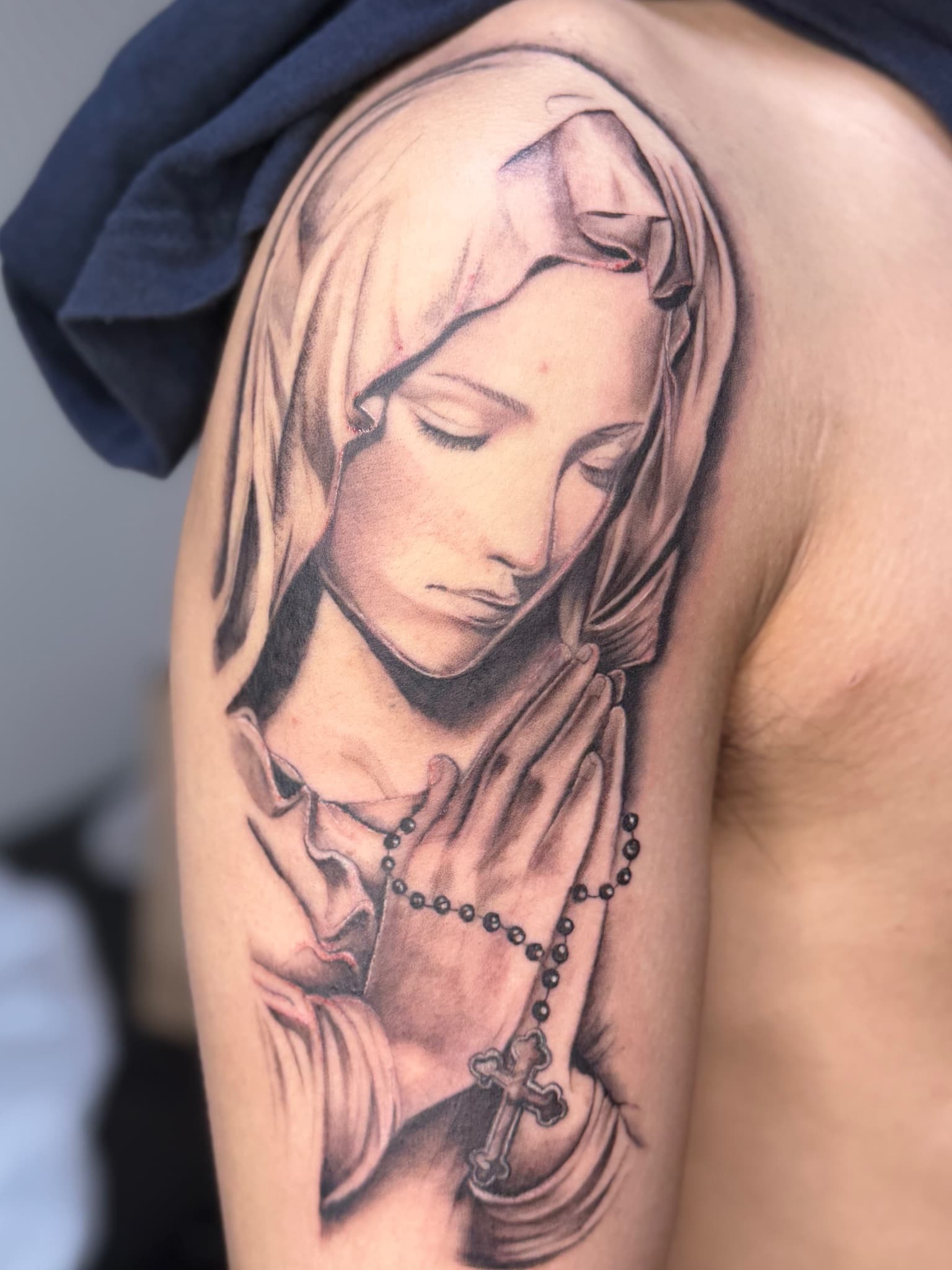
Roses and prayer
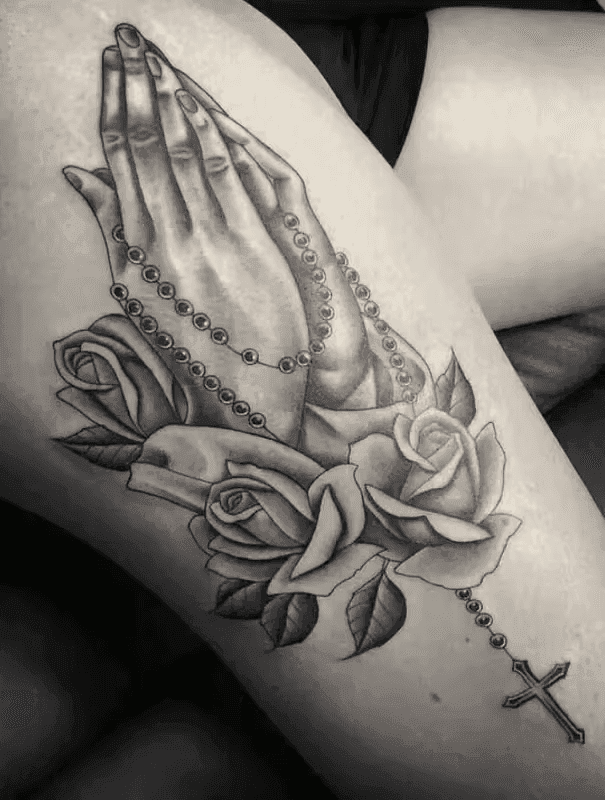
The Mexican American clients at Good Time Charlie's asked for fine lines and black and grey shading, fancy lettering, roses, portraits of loved ones and religious symbols. (Source: NPR, April 12, 2018)
The best-known image of praying hands is Albrecht Dürer's drawing Praying Hands (1508), reproductions of which still hang in millions of homes as a religious icon. (Source: The Art Newspaper, December 4, 2018)
Browse roses under rose tattoo designs.
Chicano Work on Tattoo Japan
Tattoo Japan has 31 pieces tagged Chicano. Of those, 25 are in black and grey (as of November 18, 2026).
The motifs most often combined with them are roses (7), lettering (6), two-face masks (5) and clocks (4). By placement, 20 are on the arm, including 10 on the forearm.
For black and grey work beyond Chicano motifs, see black and grey tattoo designs.
Chicano Tattoo FAQ
What does a Chicano tattoo mean?
There is no single meaning. The style grew out of Mexican American culture, with portraits that remember the dead and lettering that says where you come from. What you put into it is up to you.
What is the difference between black and grey and Chicano tattoos?
Black and grey is the technique: black ink and diluted grey only. NPR traces the roots of black and grey realism to the Chicano culture of East Los Angeles. (Source: NPR, April 12, 2018) Work in that technique with Chicano imagery is what people usually call a Chicano tattoo.
Where should a Chicano tattoo go?
No placement has a fixed meaning. On Tattoo Japan the arm is the most common. For detailed portraits, show your reference to the artist and ask how large it needs to be. Browse arm tattoo designs and back tattoo designs.