



What a Red Spider Lily Tattoo Means
The red spider lily (Lycoris radiata) is the flower Japan calls higanbana. English names include red spider lily, hurricane lily and equinox flower. (Source: NC State Extension, Lycoris radiata)
The Japanese name comes from higan, the seven days around the equinox when families visit graves and temples hold services. The flower sends up a bare stalk and blooms red around the autumn higan. (Sources: Kotobank, "Higan"; Kotobank, "Higanbana," Encyclopedia Nipponica, both in Japanese)
No tattoo motif has one fixed meaning. What follows is what Japanese dictionaries and encyclopedias record about the flower, so you can decide what yours stands for.
Manjushage: a flower of the Buddhist heavens
The flower's other common name, manjushage, is a transliteration of the Sanskrit mañjūṣaka. In Buddhist texts it is a soft flower that grows in the heavens, and those who see it are said to leave their bad deeds behind. In Japan the name came to mean the red spider lily. (Source: Kotobank, "Manjushage," Nihon Kokugo Daijiten and Daijisen, in Japanese)
Dictionaries disagree on the heavenly flower's color: some say white, one says red. That leaves room for a black and grey version as well as a red one.
A poisonous flower of graveyards and field edges
The plant contains lycorine and other alkaloids and is poisonous. Encyclopedia Nipponica notes a third name, shibitobana ("flower of the dead"), and says the plant is common in graveyards probably because people planted it to keep rats and other animals from disturbing burials. It adds that it was likely planted on paddy ridges and banks to stop rats and moles from tunneling. (Source: Kotobank, "Higanbana," Encyclopedia Nipponica)
The same bulb also fed people. There are records of soaking its starch in water to remove the poison and eating it in times of famine. (Source: Kotobank, "Higanbana," Britannica Japan)
This is why the flower can carry remembrance of someone who has died, without having to mean death itself.
Flowers and leaves that never meet
The leaves come up only after the flower stalk has withered. They stay green through winter and die back the next spring, so the plant is never in leaf and in bloom at once. Most plants in Japan are triploid and set no seed. (Source: Kotobank, "Higanbana," Encyclopedia Nipponica and Heibonsha World Encyclopedia)
That habit makes the flower a natural subject for a tattoo about someone you cannot be with.
Red Spider Lily Tattoo Design Trends
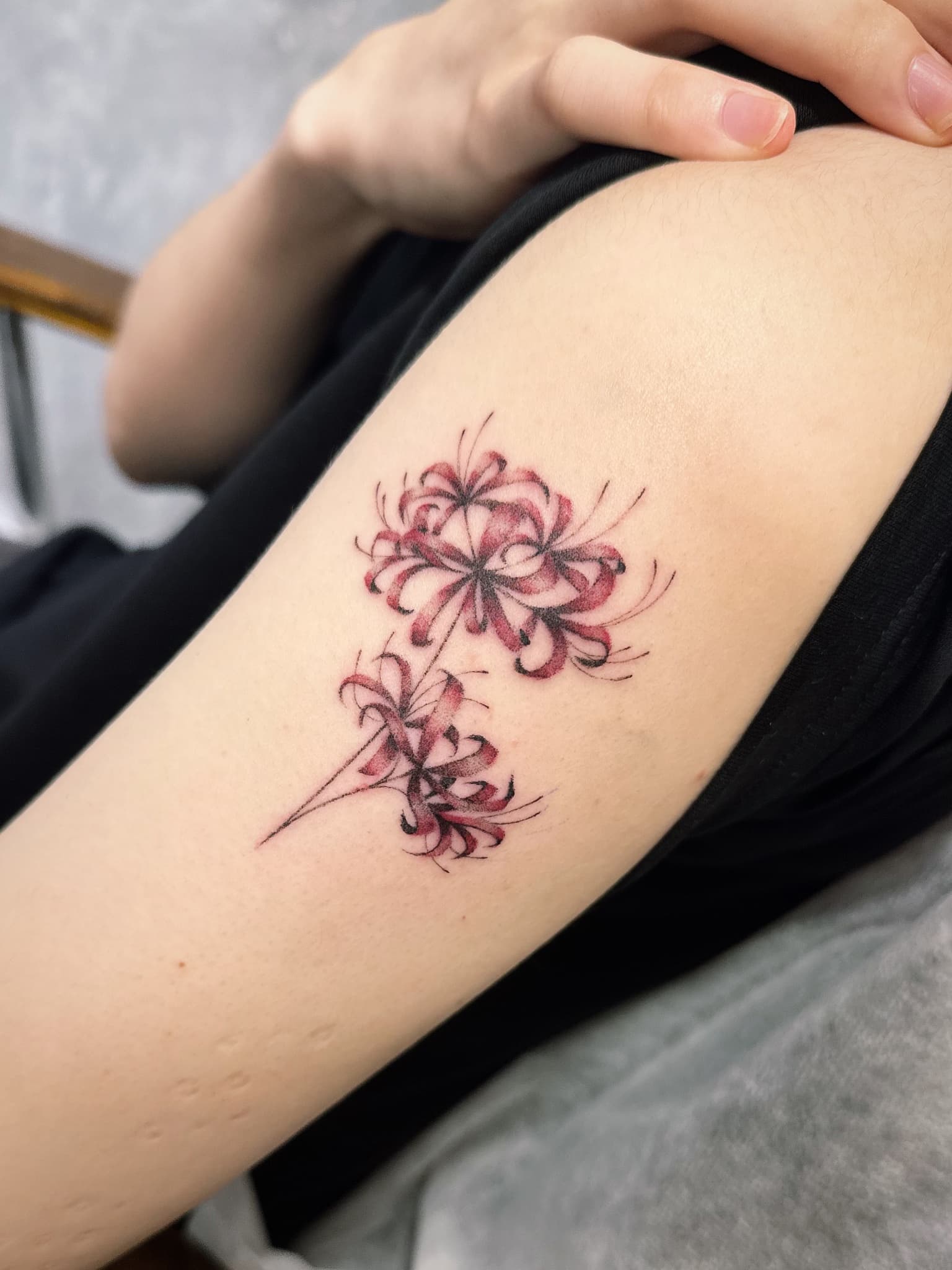
The flower is all line: narrow petals that curl back and long stamens that fan outward. It suits fine line work well.
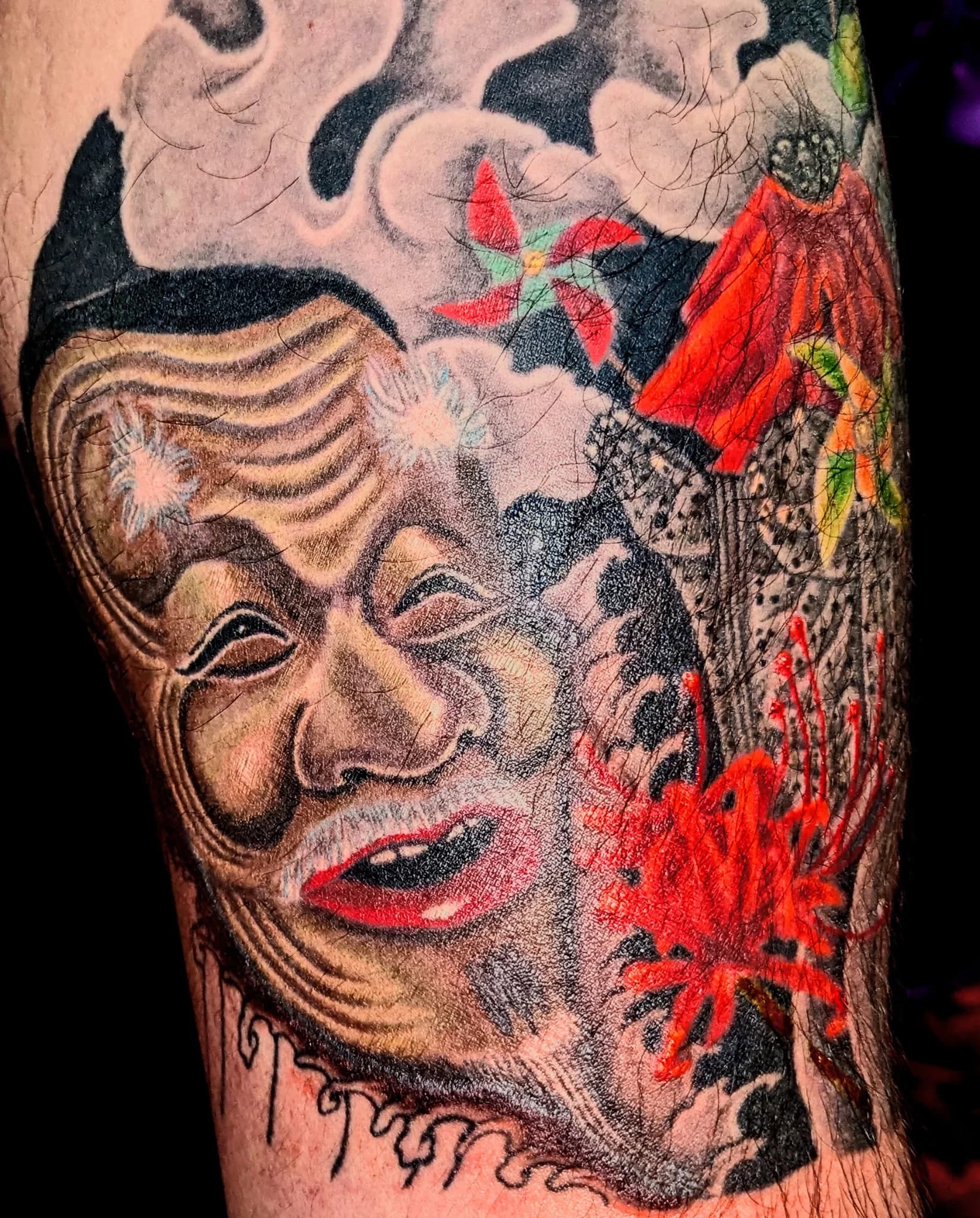
Some pieces use red to make the bloom stand out, and others are shaded in black and grey. The long, straight stem also fits vertical placements such as the forearm, the shin or along the spine.
To compare it with other flowers, see flower tattoo designs and lotus tattoo designs. For other motifs, read our list of tattoo meanings.
Red Spider Lily Tattoo FAQ
Is a red spider lily tattoo bad luck in Japan?
There is no single answer. The flower grows in graveyards and is called the flower of the dead, but manjushage is also the name of a heavenly flower that frees people from their bad deeds. Which side you put into the tattoo is up to you.
Where can I see red spider lilies in Japan?
Kinchakuda Manjushage Park in Hidaka, Saitama, is described by the city as one of the largest colonies in Japan, with five million flowers. The city holds a festival there each autumn; in 2026 it ran from September 21 to October 6. (Source: Hidaka City, Kinchakuda Manjushage Festival, in Japanese)
Photos of the real flower, alone and in a field, are useful reference when you talk a design through with your artist.