


What a Moon Tattoo Means
A moon tattoo has no single, fixed meaning. Because the moon waxes and wanes, though, it runs through myths, calendars and festivals around the world, Japan included. Here is what reference works and astronomers can confirm.
Phases, death and rebirth
The moon goes through its full cycle of phases about every 29.5 days. The eight phases, in order, are new moon, waxing crescent, first quarter, waxing gibbous, full moon, waning gibbous, third quarter and waning crescent. (Source: NASA, "Moon Phases")
Some myths, in Africa among other places, read the waxing and waning as the moon dying and coming back to life, and tie it to stories about where human death, or immortality, came from. (Source: Kotobank, "Tsuki" (moon), Encyclopedia Nipponica and Heibonsha World Encyclopedia, in Japanese)
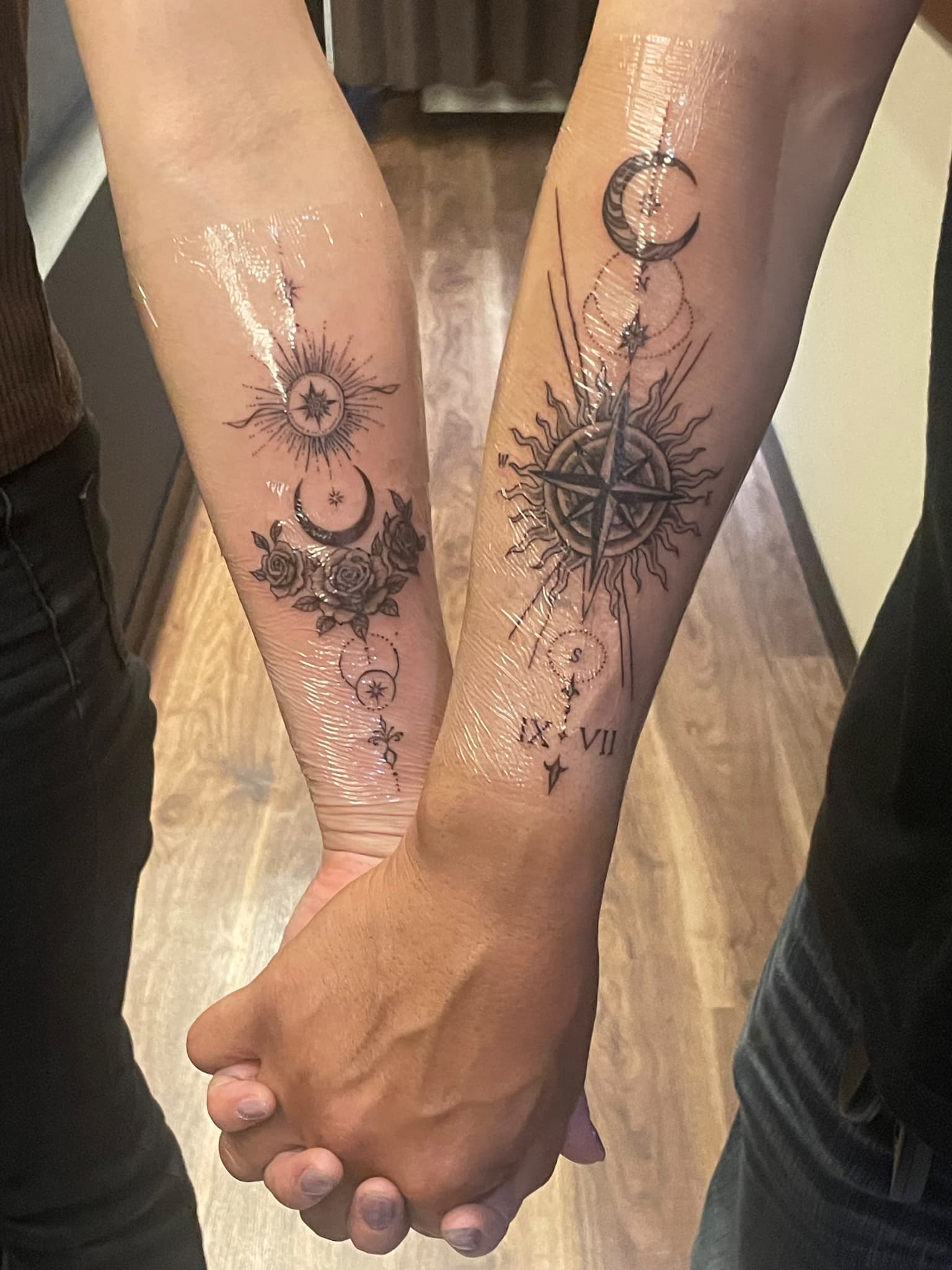
What a sun and moon tattoo means
A sun and moon design has no fixed meaning either. But in both East Asian and Western thought, the sun and the moon have long been treated as a pair.
In Chinese yin-yang thought, the sun, daytime and men belong to yang, while the moon, night and women belong to yin. The two have opposite natures, and everything in the world is said to arise from their interaction. (Source: Kotobank, "In'yo" (yin and yang), Nihon Kokugo Daijiten and Daijisen, in Japanese)
Western tradition also contrasts the sun as an active male with the moon as a passive female. (Source: Kotobank, "Tsuki," Heibonsha World Encyclopedia, in Japanese)
Japanese myth makes the sun and moon siblings. According to the Kojiki, the sun goddess Amaterasu came into being when the god Izanagi washed his left eye during a purification rite, and the moon god Tsukuyomi when he washed his right eye. (Sources: Kokugakuin University, Encyclopedia of Shinto, "Amaterasu"; "Tsukuyomi")
In an alternate account in the Nihongi, Tsukuyomi kills the food deity Ukemochi. Amaterasu condemns him, and he is forced to live apart from the sun, "resulting in the separation of day and night." (Source: Kokugakuin University, Encyclopedia of Shinto, "Tsukuyomi")
Seven of the 27 moon designs on Tattoo Japan include a sun (as of November 18, 2026). Sun-only pieces are under sun tattoo designs.
Japanese names for the moon
A crescent moon is lit along its western edge and is easiest to see in the western sky after sunset. (Source: National Astronomical Observatory of Japan, in Japanese)
Japanese has a name for almost every stage of the moon. Besides mikazuki (the crescent), there are yumiharizuki (literally "drawn-bow moon"), mochizuki, izayoi, tachimachi, imachi, nemachi, fukemachi, ariake and yuzuki ("evening moon"). (Source: Kotobank, "Tsuki," Encyclopedia Nipponica, in Japanese)
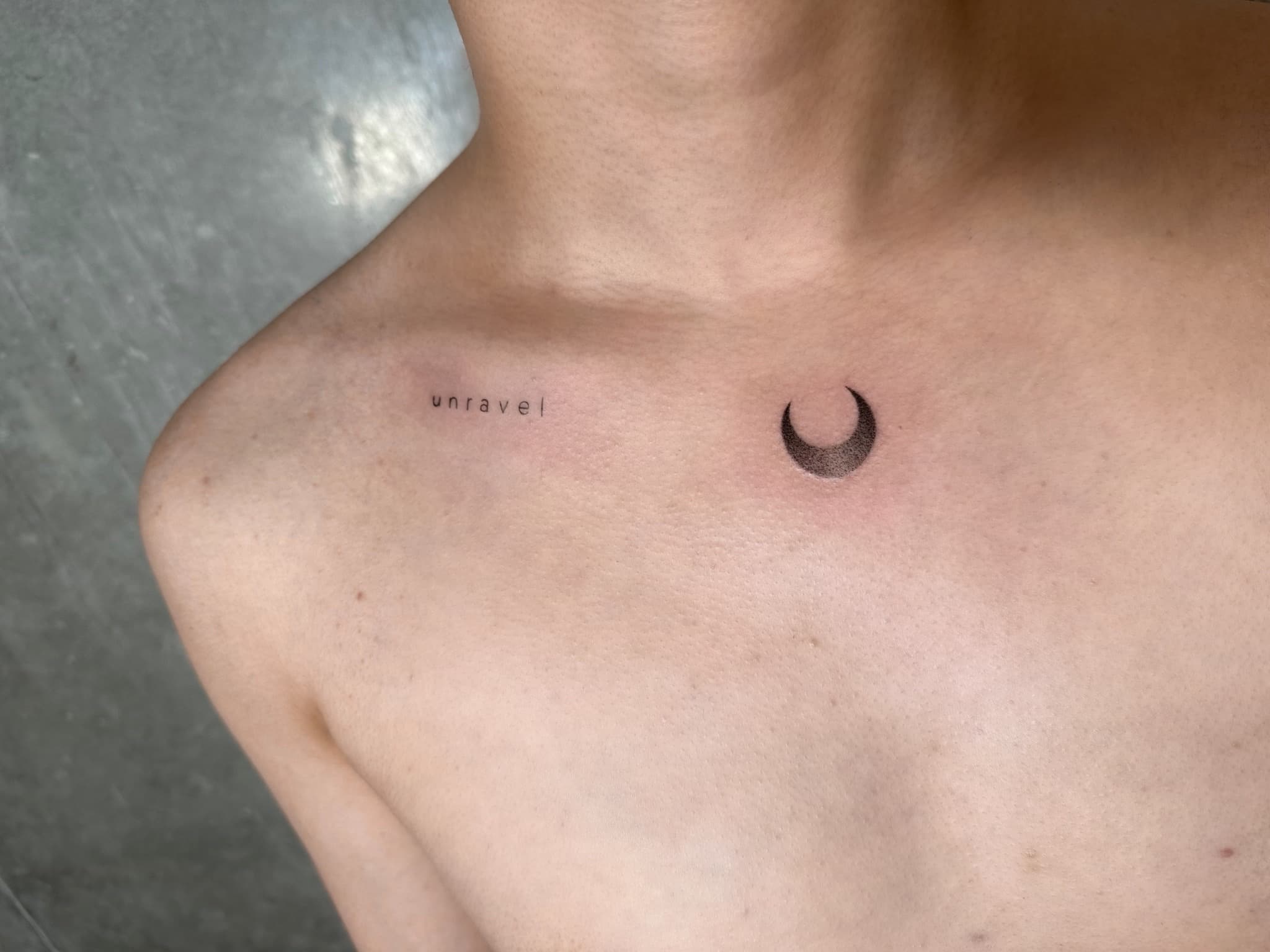
Izayoi is the moon on the 16th night of the lunar month, the night after the full moon. It rises a little later, and one theory takes the name from a word meaning "to hesitate." (Source: Kotobank, "Izayoi," Encyclopedia Nipponica, in Japanese) The moons of the next four nights are named for how people waited for them: tachimachi, the moon that rises while you wait standing; imachi, while you wait sitting; and then the moon you wait for lying down, and the one that does not rise until late at night. (Source: Kotobank, "Tachimachizuki," Encyclopedia Nipponica, in Japanese) Any of these words can be added as lettering next to the moon itself.
The rabbit in the moon
In Japan, the dark patches on the moon are seen as a rabbit pounding rice cakes (mochi). In China a rabbit lives on the moon too, but it does not pound mochi, and it shares the moon with a toad. (Source: Kotobank, "Tsuki," Encyclopedia Nipponica, in Japanese) Stories of a moon rabbit are also found in India, Mongolia and Central America. (Source: Kotobank, "Tsuki," Heibonsha World Encyclopedia, in Japanese)
The Konjaku Monogatari, a classic Japanese story collection, tells of a rabbit that roasts itself to feed an old man who is really the Buddhist deity Taishakuten (Indra) in disguise. Praised for its sincerity, the rabbit comes to live on the moon. (Source: Kotobank, "Usagi" (rabbit), Nihon Kokugo Daijiten, in Japanese)
Moon Tattoo Designs on Tattoo Japan
Tattoo Japan has 27 moon designs (as of November 18, 2026). Eleven are on the arm, 5 on the chest, 5 on the leg (4 of them on the ankle) and 3 on the back. Eighteen of the 27 are tagged as small one-point tattoos.


Twelve are black and grey and 11 are fine line work. Besides the sun (7), the moon is most often paired with stars (6), and one design sets a cat on the crescent.

Moon Tattoo FAQ
What does a crescent moon tattoo mean?
It has no fixed meaning. In the cycle of phases, the waxing crescent comes after the new moon, on the way to the full moon. (Source: NASA) You can read it as something still growing, but that is your reading, not a rule.
Does a moon phase tattoo have a meaning?
Not a fixed one. Some myths treat the phases as death and rebirth, but what you attach to a waxing or a waning moon is up to you.
Is a moon tattoo feminine?
There is no rule. Western myth often makes the moon a goddess, such as Isis, Artemis or Diana. (Source: Kotobank, "Tsuki," Heibonsha World Encyclopedia, in Japanese) Japanese myth, on the other hand, gives the moon to a god, Tsukuyomi, who is usually regarded as male. (Source: Kokugakuin University, Encyclopedia of Shinto) On Tattoo Japan, 17 of the 27 moon designs are tagged "women" and 2 are tagged "men" (as of November 18, 2026).