


What an Oni Tattoo Means
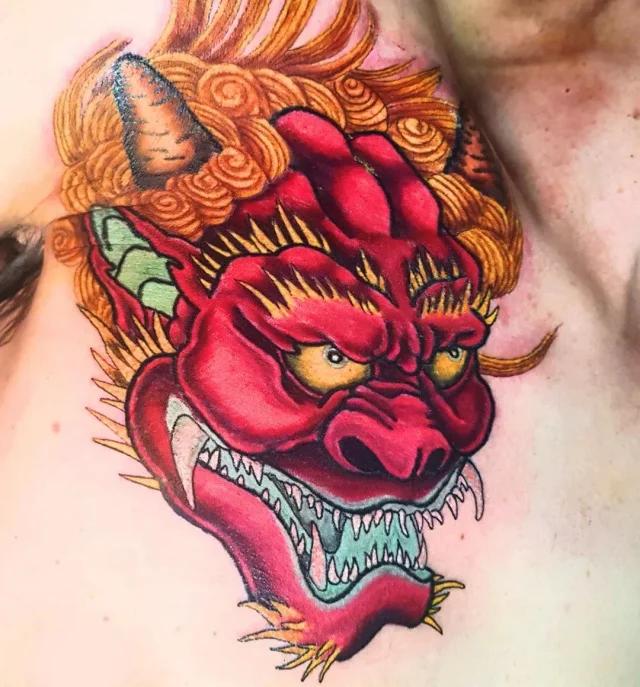
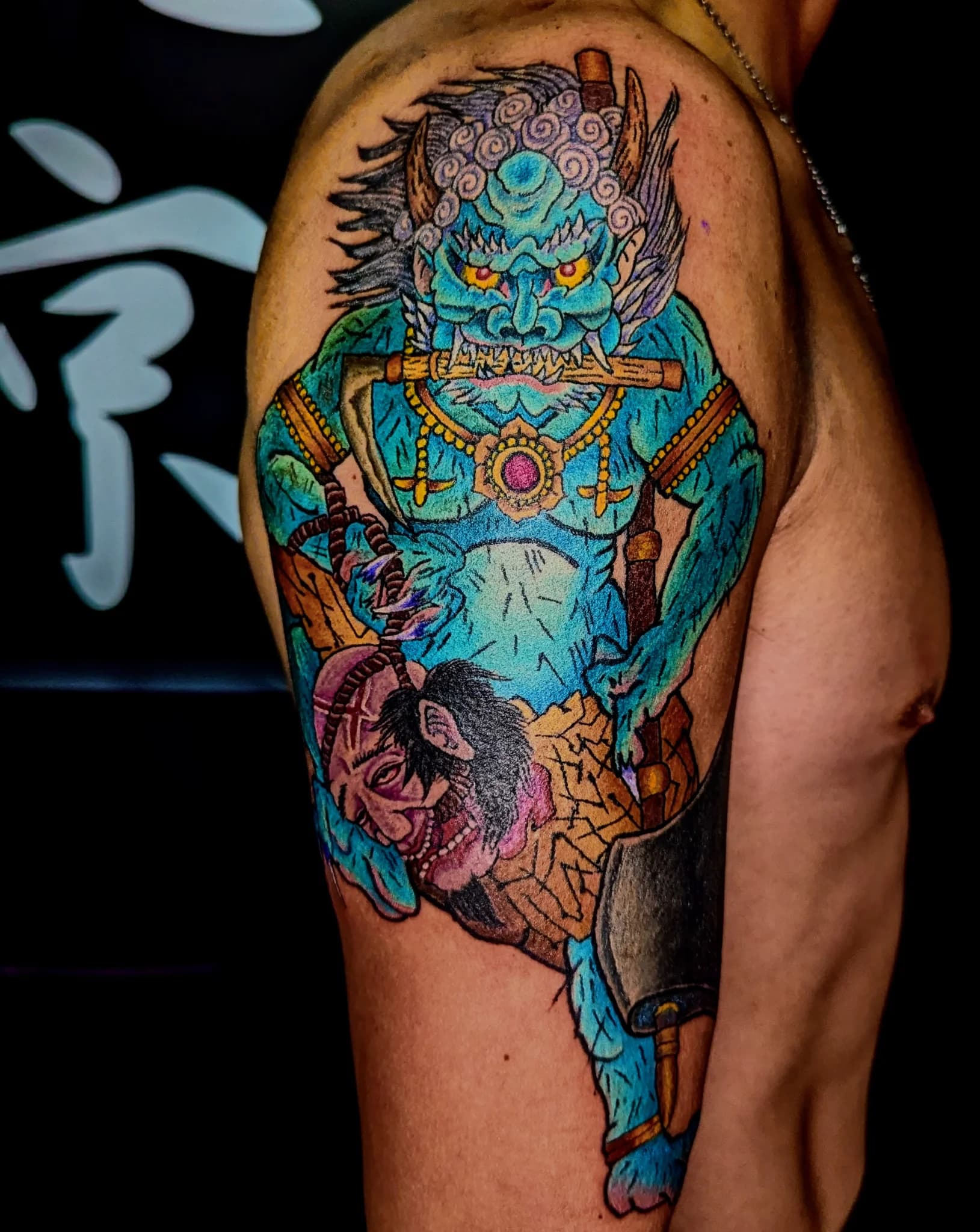
An oni is the horned ogre of Japanese folktales and seasonal rituals. A standard Japanese dictionary describes it as human in shape, with horns on its head, a mouth split wide with fangs, a tiger-skin loincloth and an iron club in its hand. (Source: Kotobank, "Oni," Daijisen, in Japanese)
No tattoo motif has one fixed meaning. The oni, though, has two sides on record: something to fear, and something strong enough to drive misfortune away. Here is what Japanese reference works say about each.
Where the word and the look come from
One theory derives the word oni from on (隠), "hidden": a being that cannot be seen. At least one encyclopedia calls this no more than a guess. (Source: Kotobank, "Oni," Nihon Kokugo Daijiten and Heibonsha World Encyclopedia)
The horns, fangs and tiger skin are not the original form. They took shape gradually under the influence of Buddhism and onmyodo, the Japanese tradition of yin-yang divination. The ox horns and the tiger skin are tied to ushitora, the "ox-tiger" direction (northeast), known as the demon gate where oni were said to gather. (Source: Kotobank, "Oni," Encyclopedia Nipponica and Mypedia)
Oni are drawn with red, blue, black or yellow skin. A red oni and a blue oni give the same composition a different mood. (Source: Kotobank, "Oni," Heibonsha World Encyclopedia)
The oni that is driven out, and the oni that protects
At Setsubun, people throw beans to chase oni away. Tsuina, a rite for driving out demons, has been performed at Setsubun since the Heian period. But the encyclopedias also record many good oni that bring fortune, and oni whose power drives off evil appear in folk performing arts. (Source: Kotobank, "Oni," Encyclopedia Nipponica and Heibonsha World Encyclopedia)
Onigawara, the ridge-end roof tiles, show the protective side. In Japan, tiles bearing an oni face became the main type from the 8th century, placed on buildings to ward off evil. (Source: Kotobank, "Onigawara," Encyclopedia Nipponica and Nihon Kokugo Daijiten)
So an oni tattoo can stand for strength or protection as readily as for menace.
Oni, hannya and Shuten-doji
Hannya is a Noh mask of a female demon. It has two horns and expresses a woman's fierce jealousy and rage, and it is used in plays such as Aoi no Ue and Dojoji. The word hannya itself is a Buddhist term for the wisdom that leads to enlightenment; the mask is said to take its name from Hannya-bo, the mask carver credited with creating it. (Source: Kotobank, "Hannya," Daijisen and Encyclopedia Nipponica)
Shuten-doji is the legendary oni chief of Mount Oe in Tamba. The story of his defeat by the warrior Minamoto no Raiko and his four retainers became a subject for picture scrolls, Noh and kabuki. (Source: Kotobank, "Shuten-doji," Daijisen and Encyclopedia Nipponica)
On Tattoo Japan, mask-style pieces are under oni mask tattoo designs, and the female demon mask is under hannya tattoo designs.
Oni Tattoo Design Trends
Oni designs come as a large face alone or as a full figure holding its club. A face fits an arm or the chest. A full figure needs a broad area such as the back or thigh.
In Japanese traditional work, an oni can be the centerpiece of one large composition. For the background to other Japanese motifs, see our list of tattoo meanings.
Oni Tattoo FAQ
Is an oni tattoo bad luck?
There is no single answer. Oni are driven out at Setsubun, yet oni faces have guarded Japanese roofs for more than a thousand years. Which side your tattoo carries is your choice.
Are oni and hannya the same thing?
No. Oni is the general word for the horned, fanged ogre. Hannya is the name of one Noh mask, a woman turned demon by jealousy and rage.