




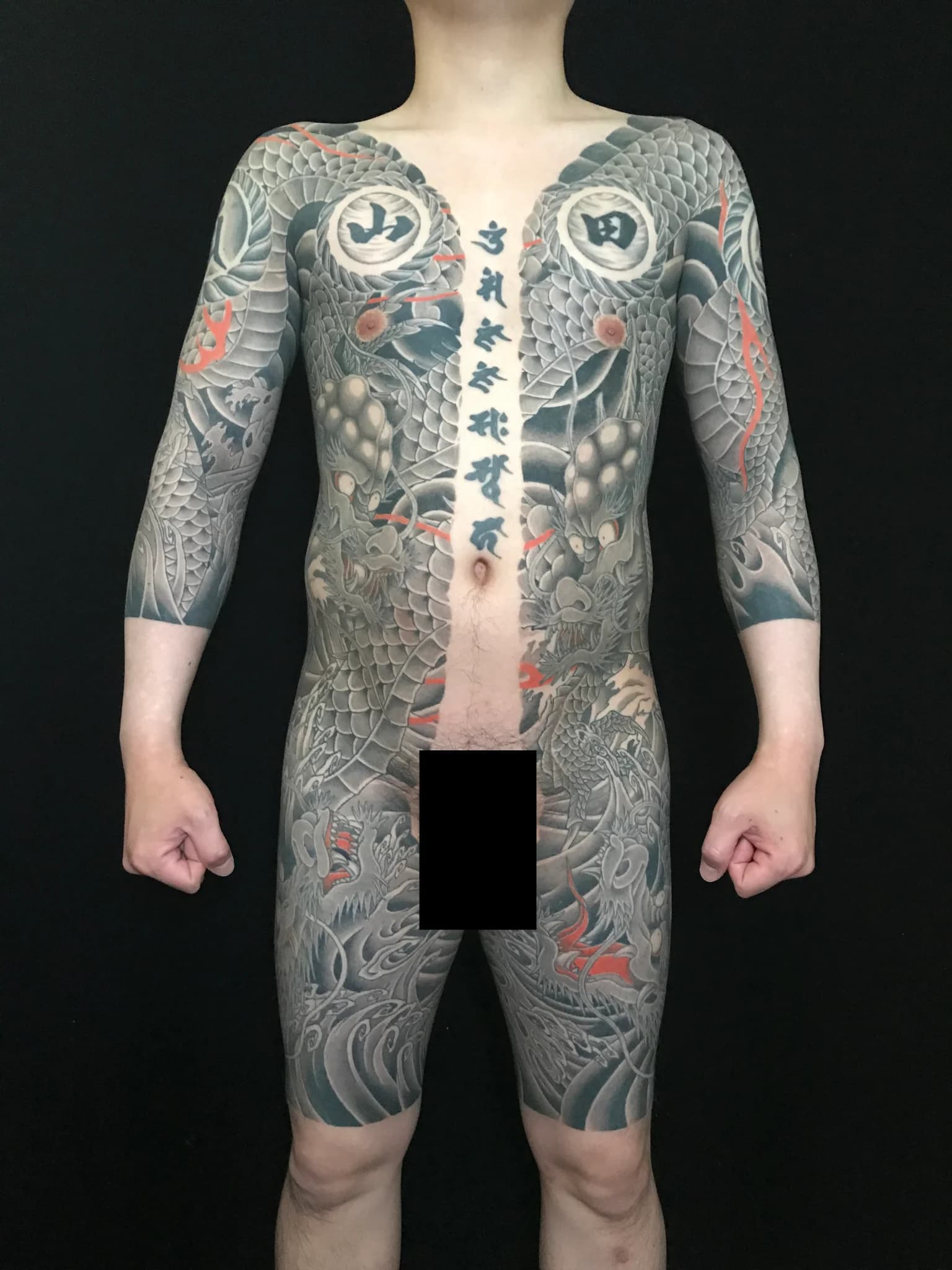
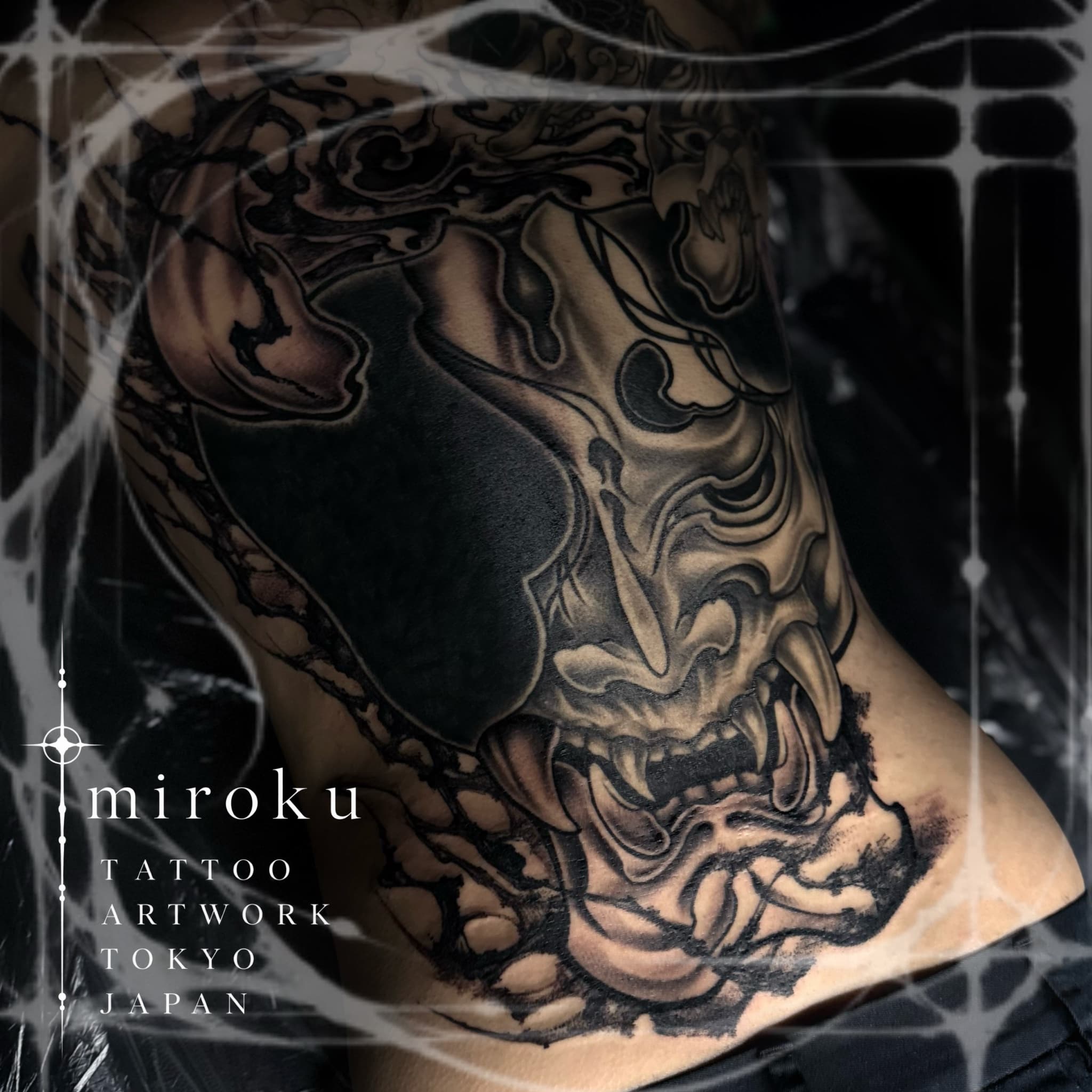

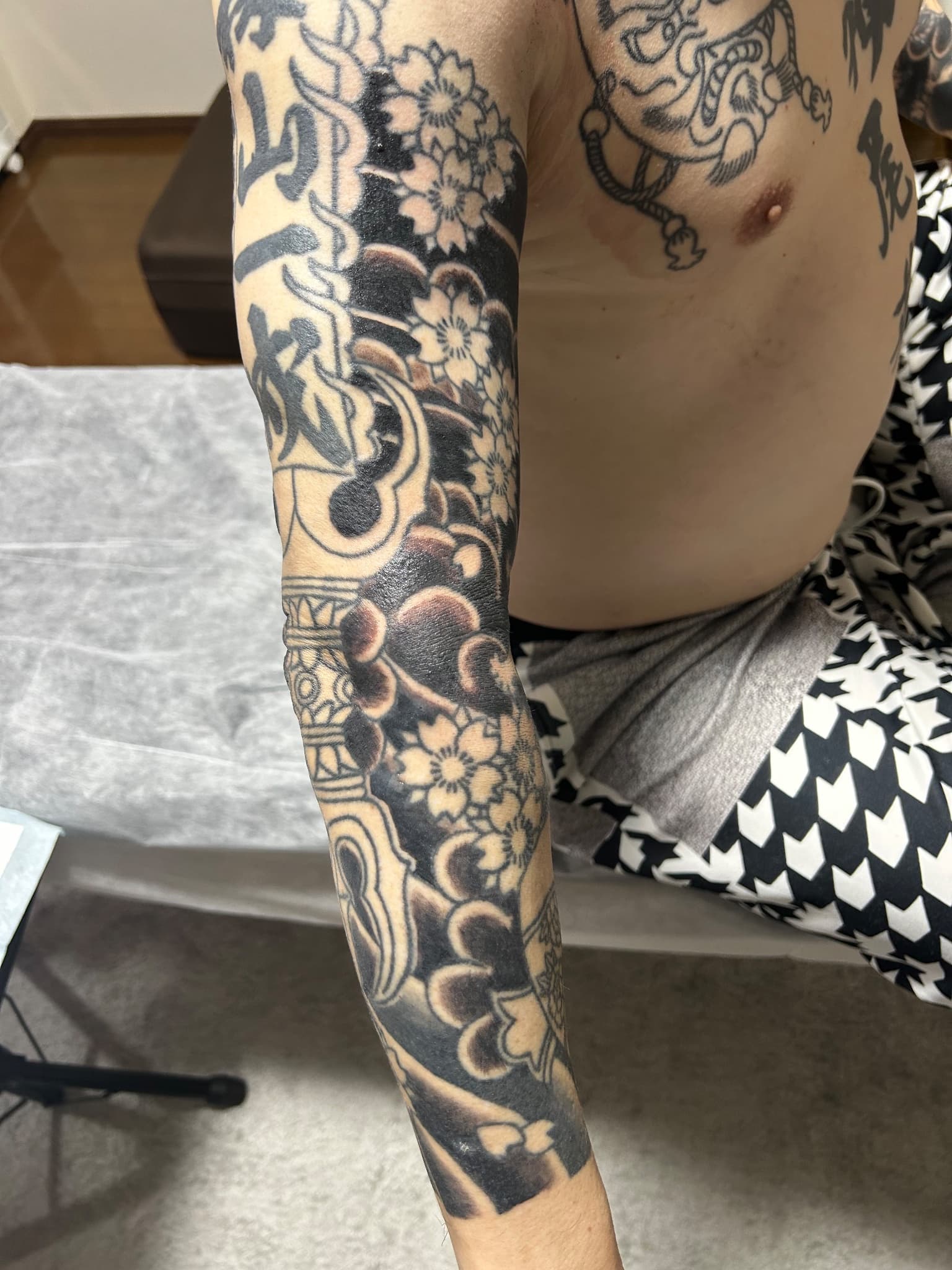

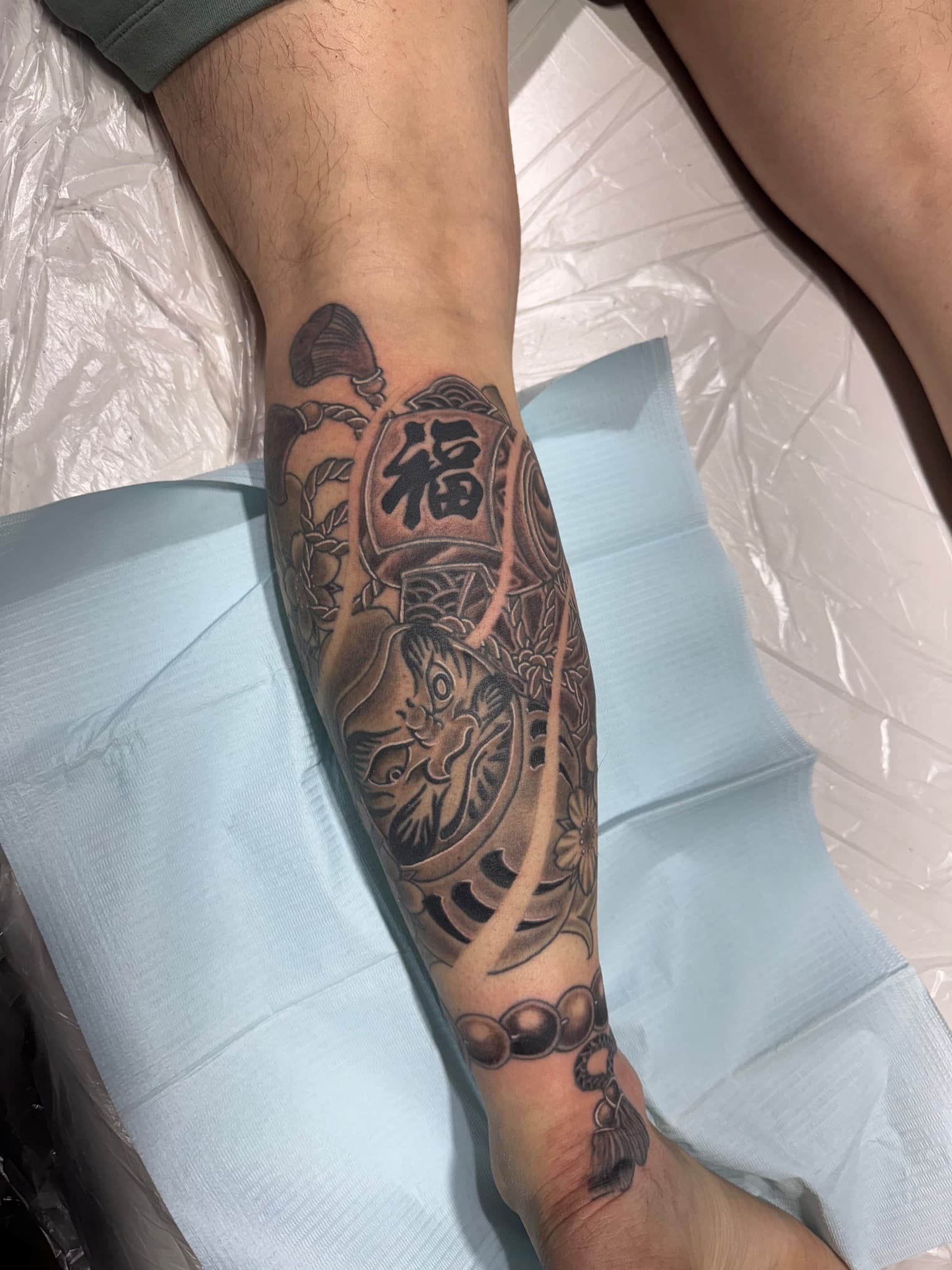

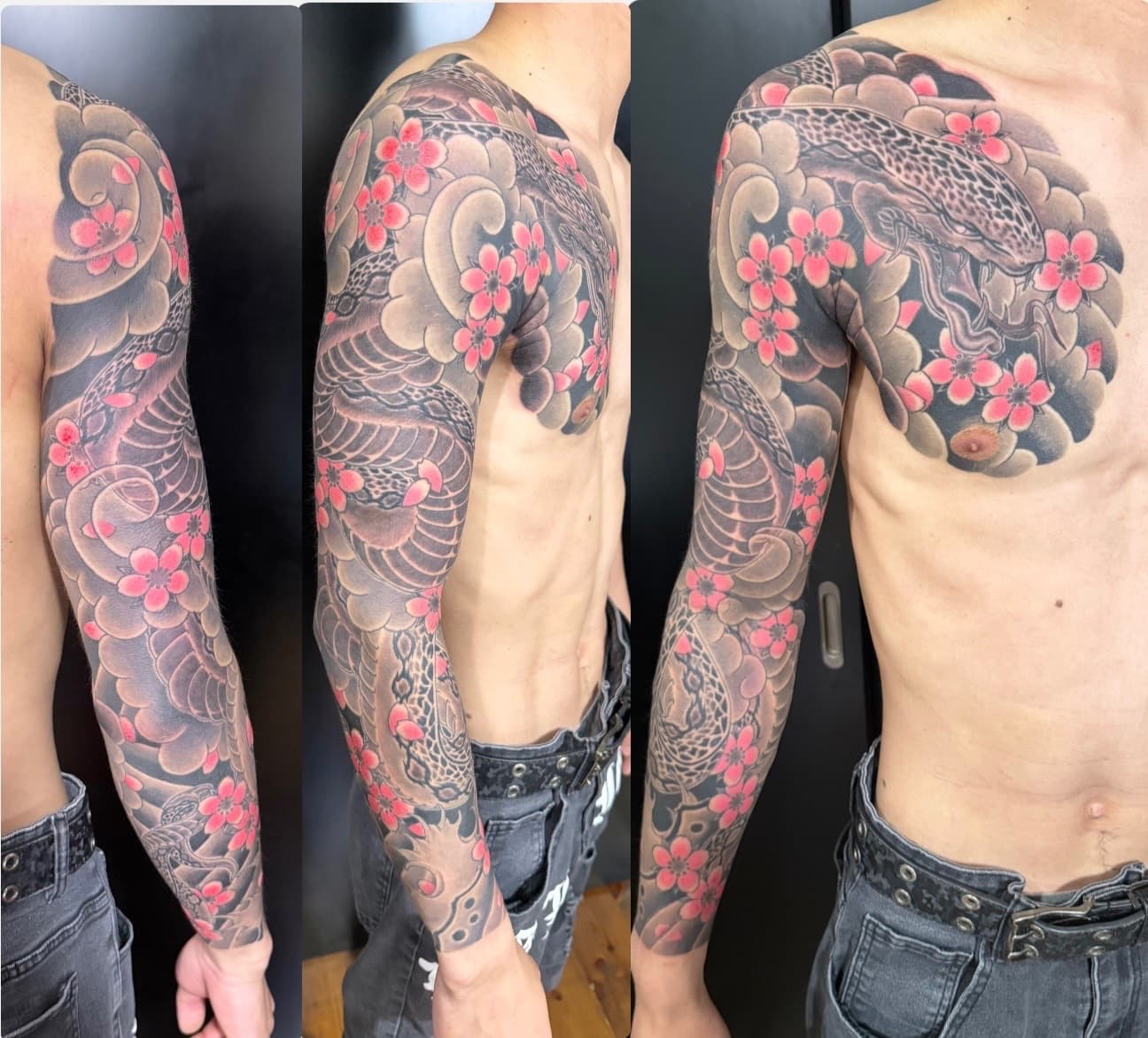
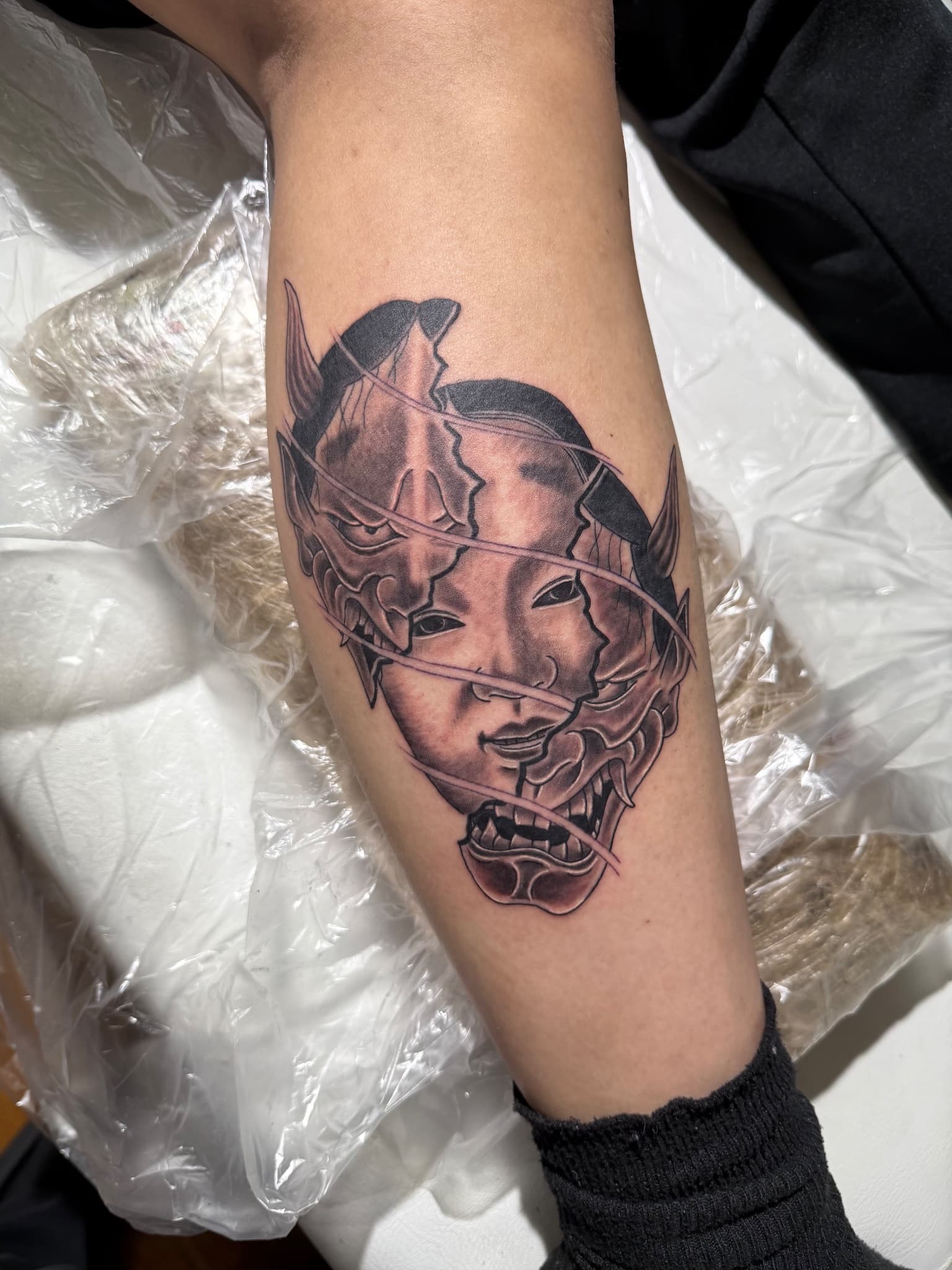
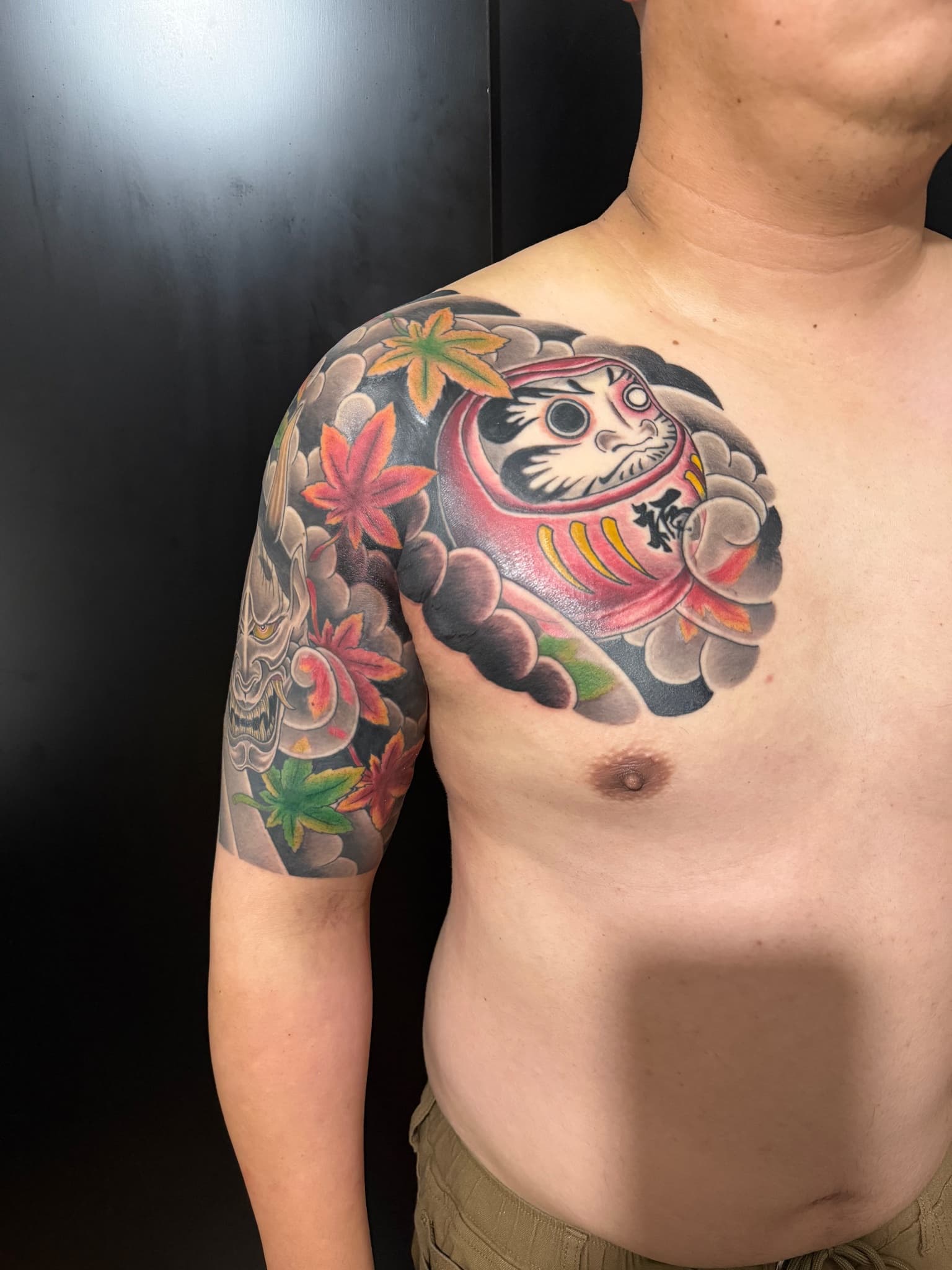
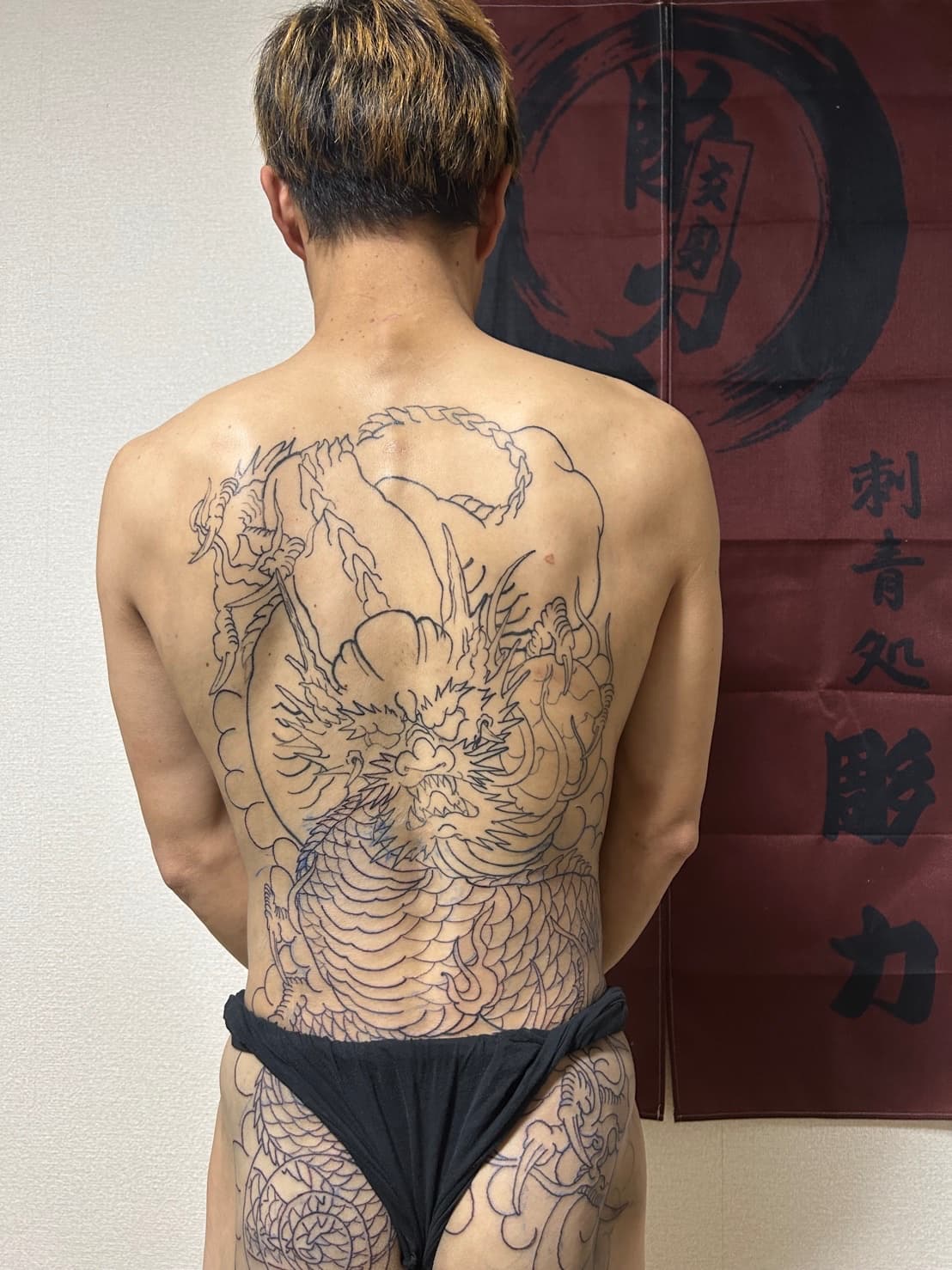
What Japanese Traditional Tattooing (Wabori) Is
Wabori is Japanese traditional tattooing built on motifs such as dragons, koi and peonies. The word itself was coined after Japan opened to the West in the 19th century, to tell traditional Japanese work apart from Western-style tattoos. (Source: VICE, November 24, 2020)
In the Edo period, the word irezumi meant tattooing as a criminal punishment, while decorative tattooing was called horimono. (Source: Kotobank, "Horimono," Heibonsha World Encyclopedia, in Japanese)
Tattoos spread among express couriers (hikyaku) and tobi, the steeplejacks who also fought fires. For ease of movement these tradesmen often tied back or removed their outer garments, sometimes down to a loincloth, and tattooing was a way of covering and adorning their bare skin. (Source: Nippon.com, "Irezumi: The Japanese Tattoo Unveiled," January 30, 2017)
In the first half of the 19th century, the ukiyo-e artist Utagawa Kuniyoshi portrayed heroes of the Chinese novel Water Margin (Suikoden) with full-body tattoos. The series was a huge hit. (Source: same as above) The Museum of Fine Arts, Boston notes that oral tradition among tattoo artists credits these prints, from about 1827 to 1830, with starting a fashion for extensive pictorial tattoos, and that some of the world's most popular tattoo motifs trace back to early 19th-century Edo. (Source: Museum of Fine Arts, Boston, "Tattoos in Japanese Prints")
Japanese Tattoo Motifs and What They Mean
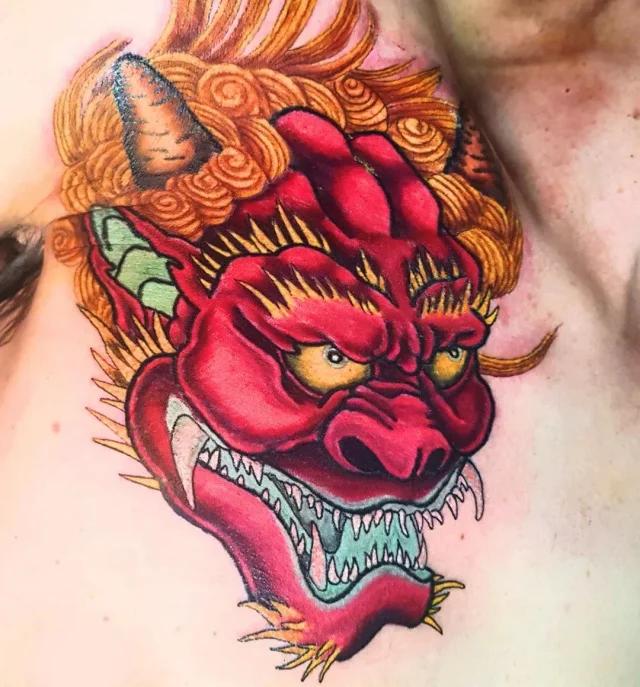
Tattoo Japan has 140 pieces in the Japanese traditional style. The most common motif tags are dragons (22), phoenixes (10), oni and snakes (9 each), koi and tigers (8 each), and peonies and hannya (7 each), as of November 18, 2026.
No motif has one fixed meaning. Here is what reference works and museums record.
Dragon
In Japanese dictionaries, the dragon is an imaginary creature with a body like a great snake, four legs and two horns. It lives in water and rises to the sky to raise clouds and bring rain. (Source: Kotobank, "Dragon," Daijisen, in Japanese)
Edo's tobi favored dragon tattoos as a kind of talisman, possibly because dragons were believed to bring rain. (Source: Nippon.com) Browse dragon tattoo designs.
Koi

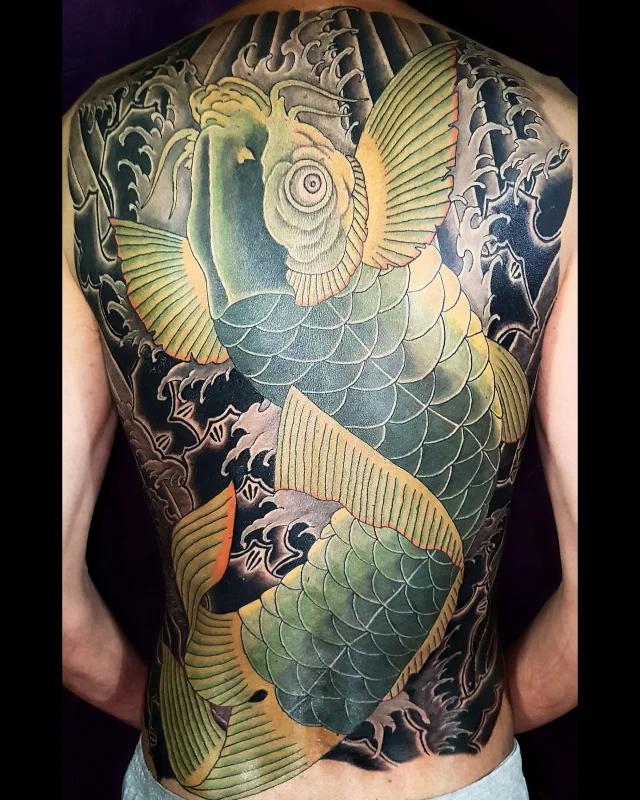
The koi stands for the carp climbing a waterfall. A story in the Chinese Book of the Later Han says that a carp able to climb the Dragon Gate falls on the Yellow River turns into a dragon, so in Japanese the image means rising in the world. (Source: Kotobank, "Koi no takinobori," Daijisen, in Japanese) See koi tattoo designs.
Lion and peony
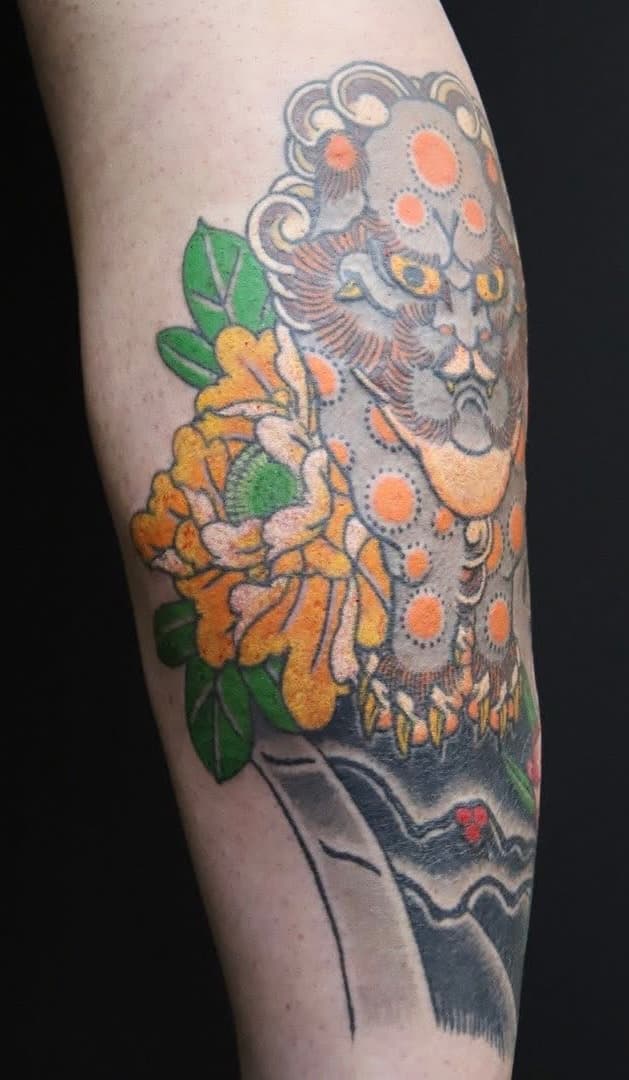
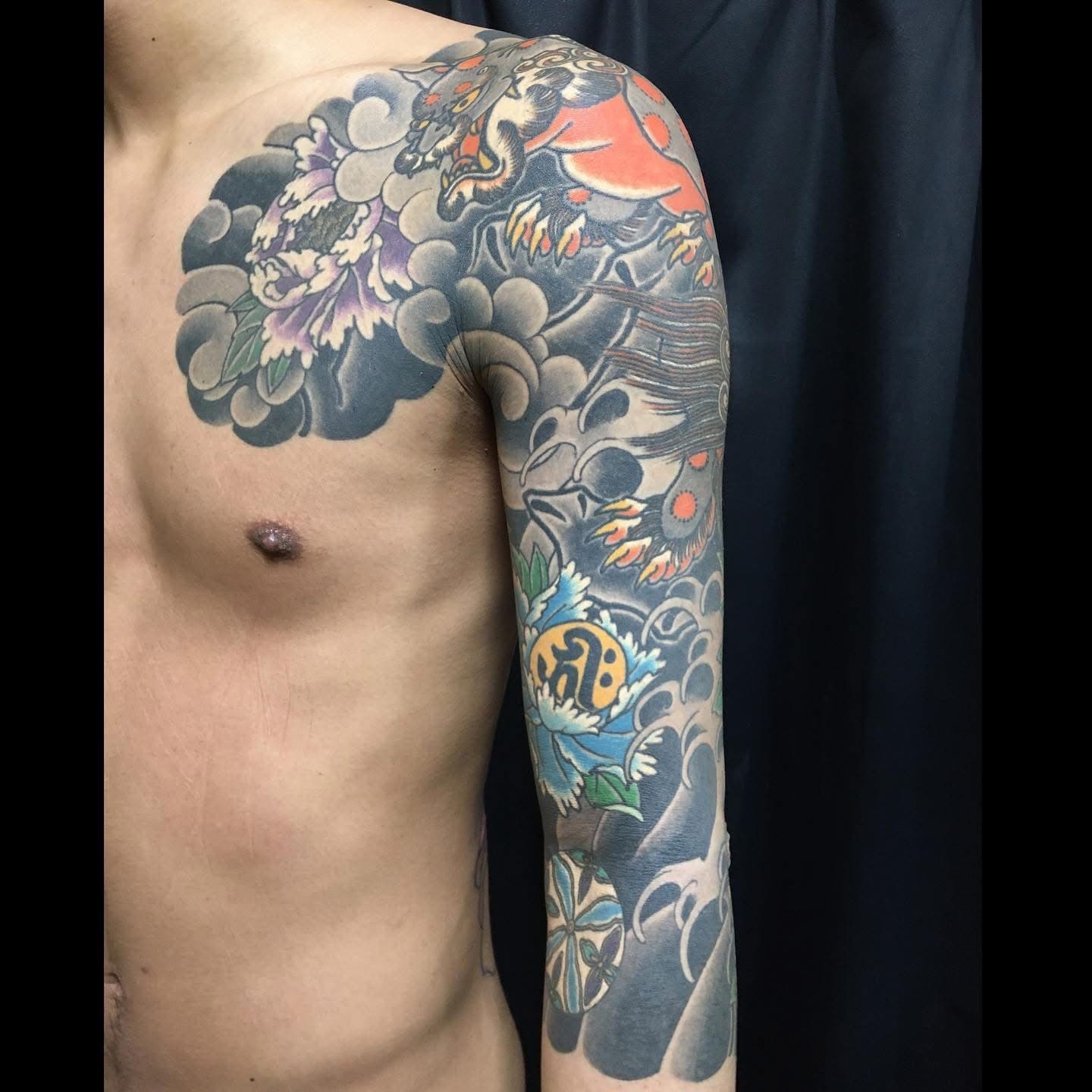
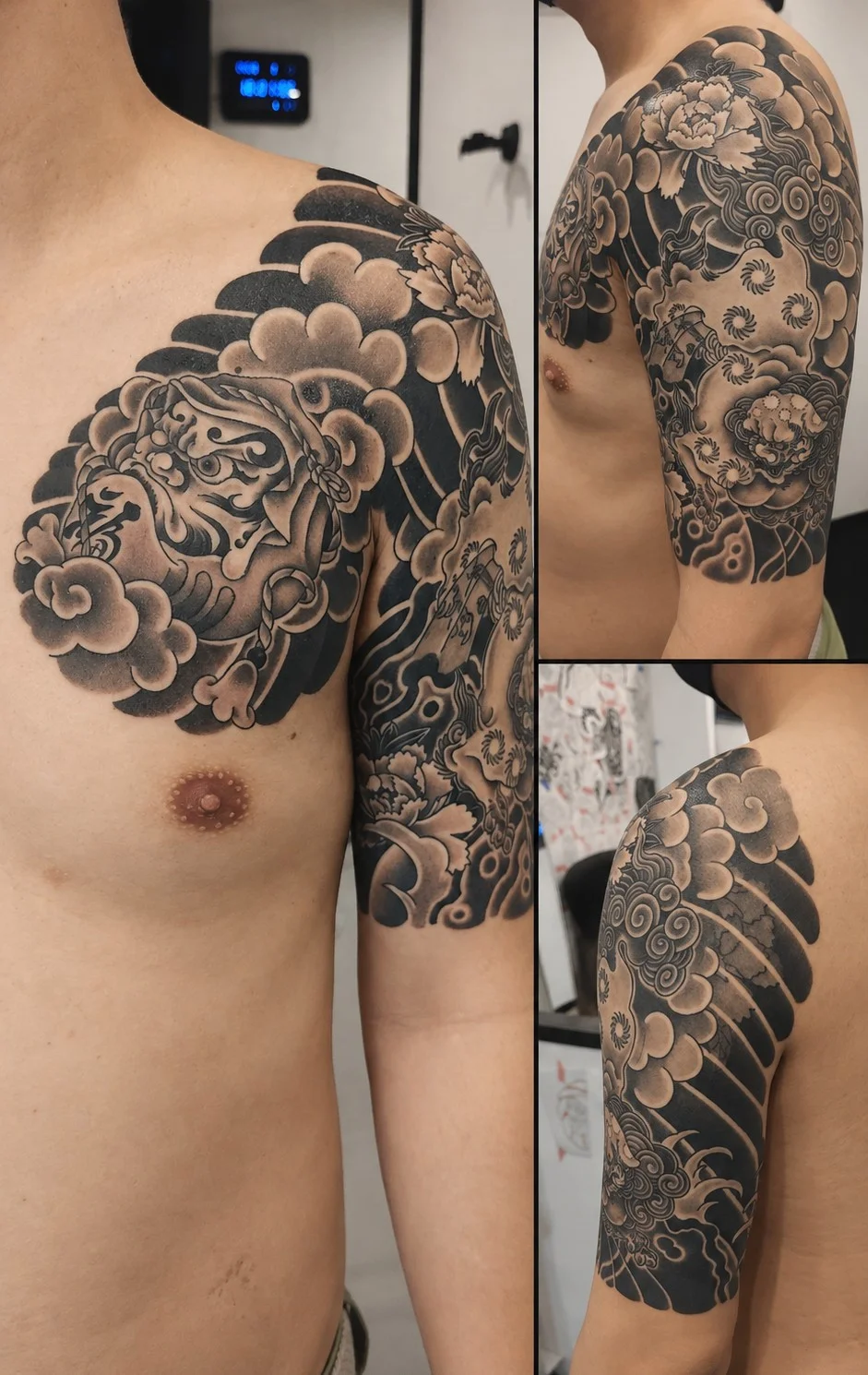
The peony is China's representative flower, with names such as "king of flowers" and "flower of wealth and rank." In Japan, the pairing of peony and lion has been popular since the Kamakura period. (Source: Kotobank, "Peony," Heibonsha World Encyclopedia, in Japanese)
In the late Edo period, tobi, firemen, craftsmen and chivalrous outlaws (kyokaku) had the karajishi (Chinese lion) and peony pattern tattooed on their bodies, alongside heroes of the Water Margin. (Source: Kotobank, "Karajishi botan," quoting Heibonsha World Encyclopedia, in Japanese) Compare peony tattoo designs.
Phoenix
The phoenix (ho-o) is an imaginary sacred bird revered in ancient China, along with the qilin, tortoise and dragon, as one of the four auspicious creatures. It was said to appear as a sign that a virtuous ruler had come. (Source: Kotobank, "Phoenix," Daijisen, in Japanese) See phoenix tattoo designs.
Hannya and oni
Hannya is a Noh mask of a female demon with two horns and a wide-split mouth. It expresses a woman's rage and jealousy, and is used in plays such as Aoi no Ue and Dojoji. (Source: Kotobank, "Hannya," Daijisen, in Japanese)
Browse hannya tattoo designs and oni tattoo designs.
Water Margin heroes
The Water Margin follows 108 outlaw heroes, led by Song Jiang, who gather at Liangshan Marsh. (Source: Kotobank, "Suikoden," Daijisen, in Japanese) In Kuniyoshi's prints, each hero's tattoo carries its own meaning.
According to CNN's report on a book by the Museum of Fine Arts, Boston's curator of Japanese art, Kuniyoshi covered the handsome martial artist Yan Qing with lions and peonies, symbols of wealth, strength and good fortune. The leopard on Ruan Xiaowu's back suggests strength and ferocity, and the ivy, waterfall and snake on Zhang Shun hint at his strength and swimming skill. (Source: CNN, August 23, 2017)
How Coverage Is Named: Gobu, Nukibori and Gakubori
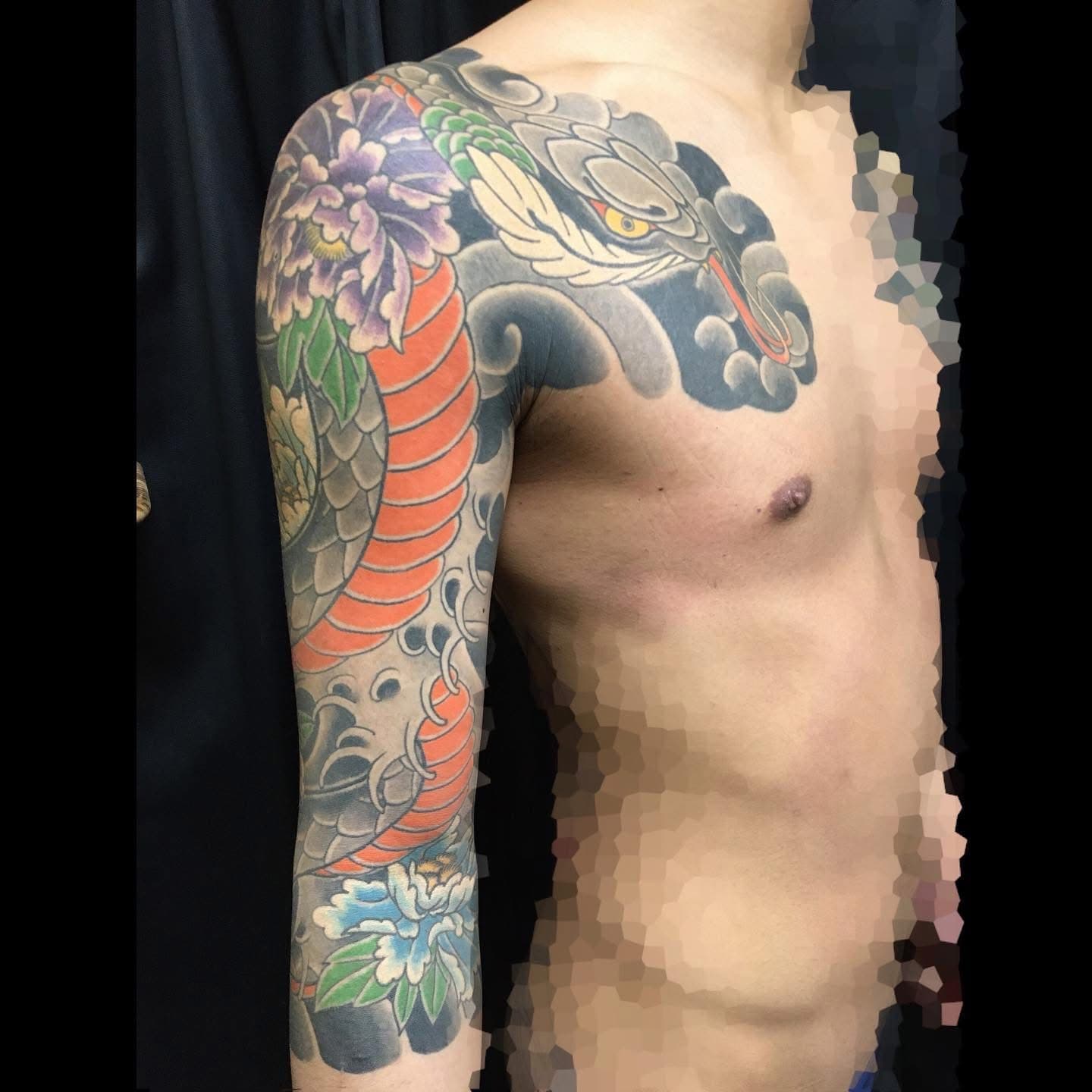
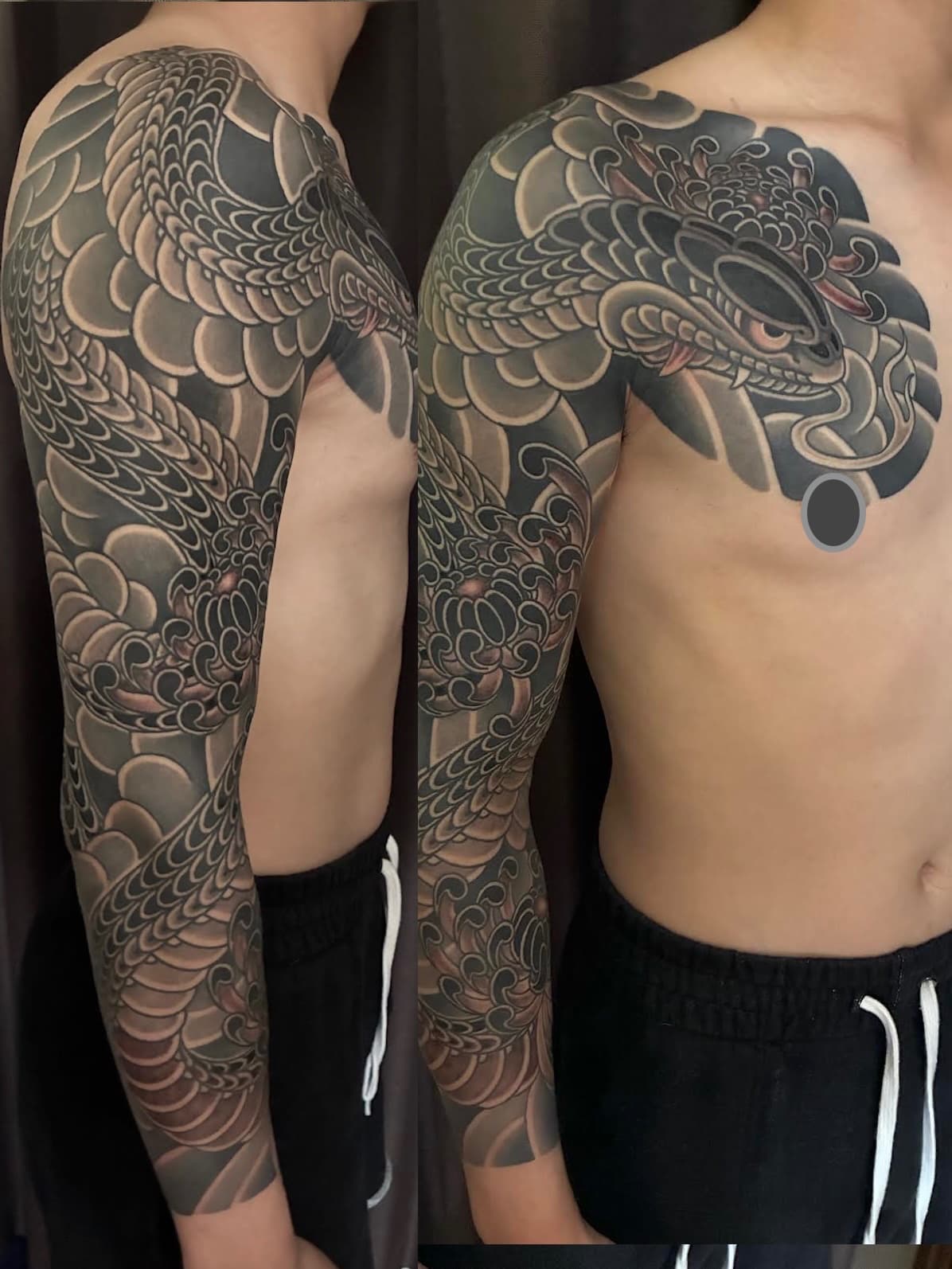
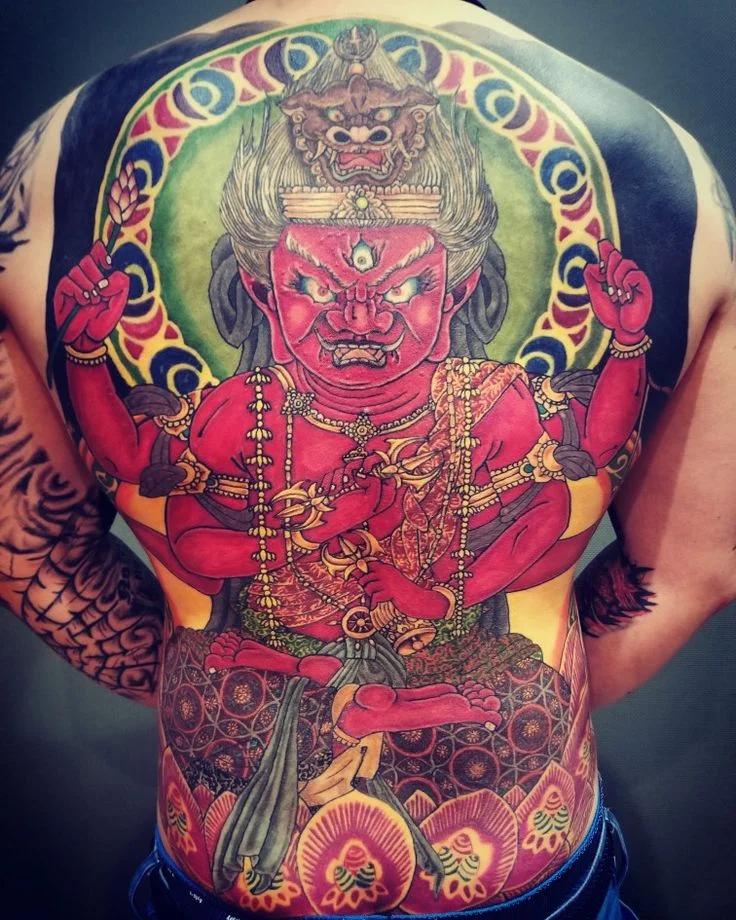
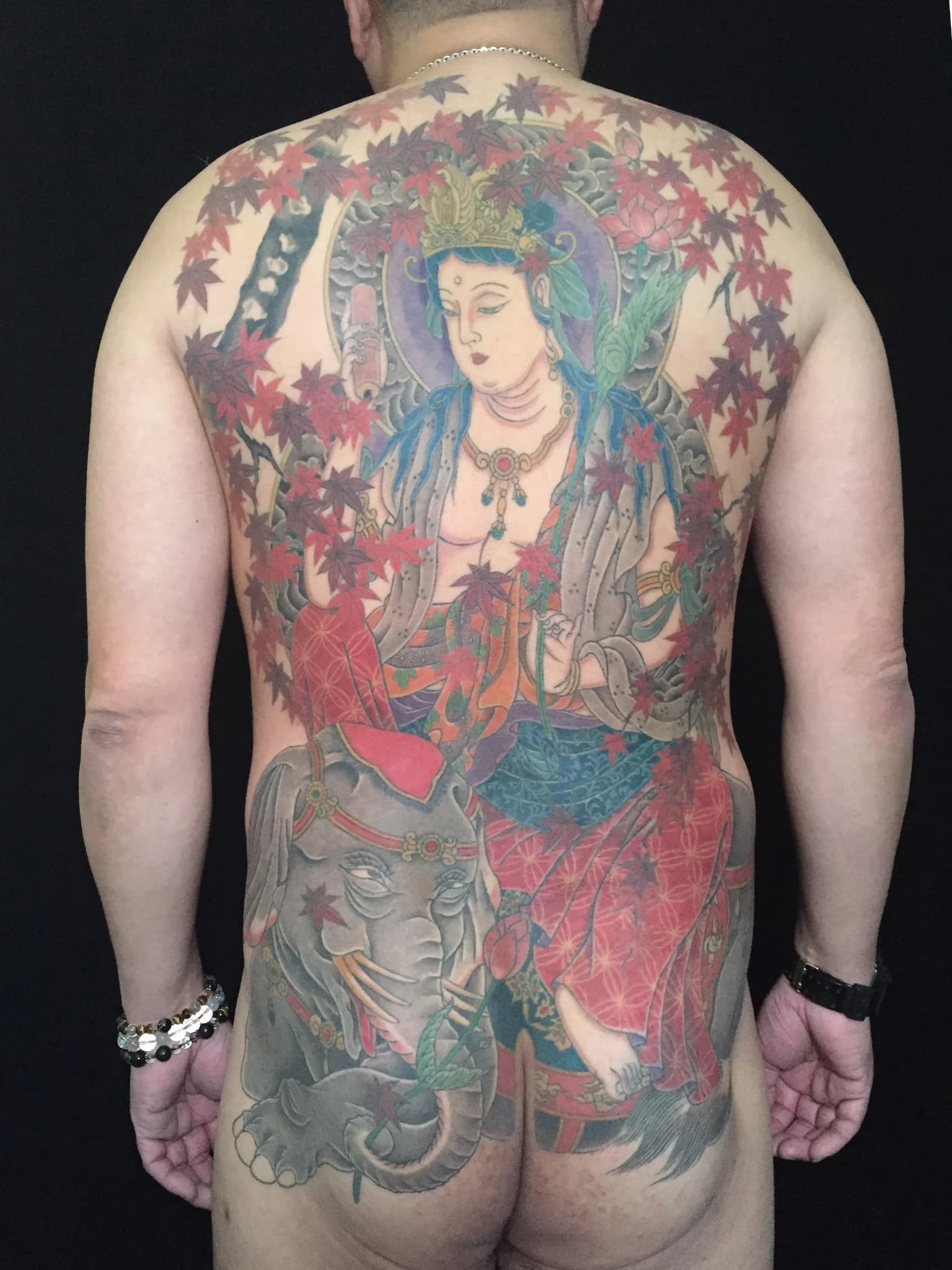
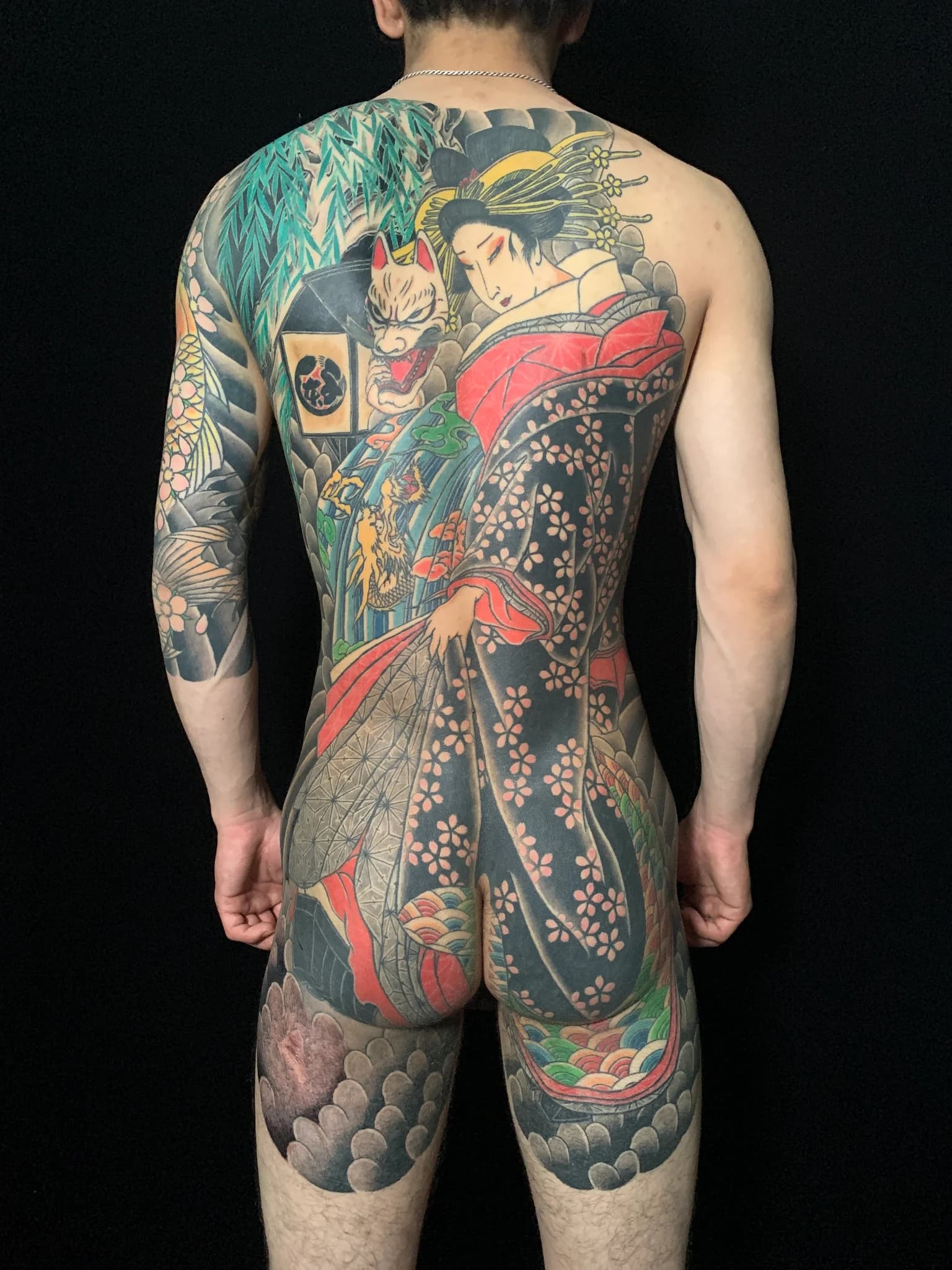
Many Japanese studios price traditional work by coverage. Enma Horiyu in Gunma lists "chest to above the elbow (gobu)" and "full back," each split into nukibori and gakubori, with gakubori priced higher. (Source: Enma Horiyu, price list, in Japanese)
Gion Daruma in Kyoto also separates "one-arm gobu, nuki" from "chest and arm gobu, with gaku." (Source: Gion Daruma, price guide, in Japanese) Studios draw these lines differently, so ask exactly what a quote covers.
A tattoo with only the outlines done and no color yet is called sujibori. (Source: Kotobank, "Sujibori," Nihon Kokugo Daijiten, in Japanese)
Work can be done by hand (tebori), pushing ink with needle-tipped rods, or by machine. A tebori artist interviewed by CNN said he usually uses a machine for outlines. (Source: CNN, January 7, 2019) If you want tebori, ask the artist directly.
Placement
On Tattoo Japan, Japanese traditional pieces sit most often on the arm (62) and back (33), as of November 18, 2026.
A Western tattoo often starts as a small piece without a background, but a full Japanese bodysuit is always one unified design. (Source: VICE) If you may extend the work later, plan the whole composition with your artist from the start.
Browse by placement under back tattoo designs and arm tattoo designs.
Japanese Traditional Tattoo FAQ
How much does a Japanese traditional tattoo cost?
It depends on coverage and style. BARON TATTOO in Osaka lists a one-arm gobu sleeve at 200,000 to 250,000 yen and a full back in nukibori from 300,000 yen. Enma Horiyu lists a full back from 500,000 yen in nukibori and from 800,000 yen in gakubori, both for black-only work. (Source: BARON TATTOO, price list and Enma Horiyu, price list, in Japanese) For more studios, see our guide to tattoo prices in Japan.
How long does a full back piece take?
Completing a full horimono takes dozens of sessions over many months. (Source: VICE) Gion Daruma estimates a full back at "two hours, ten sessions or more." (Source: Gion Daruma, price guide, in Japanese)
Can I visit an onsen with Japanese-style tattoos?
It depends on the facility. The Japan Tourism Agency says tattoo policies differ widely from ryokan to ryokan, and that some inns offer private baths that guests with tattoos can use. (Source: Japan Tourism Agency, "Ryokan Q&A") Search for tattoo-friendly onsen in Japan before you go.
What is the difference between irezumi and a tattoo?
A standard Japanese dictionary lists horimono, shisei and tattoo (tatu) as synonyms of irezumi, so they refer to the same thing. (Source: Kotobank, "Irezumi," Daijisen, in Japanese) See tattoo vs. irezumi for how the words are used.